
- 1No text yet requires a Digital Product Passport for clothing as of November 2026.
- 2The textile delegated act is planned for the end of 2027, followed by at least 18 months to adapt.
- 3The passport will be owed by the brand or the importer that places the garment on the market.
- 4Composition and origin data can be gathered now; the label can wait for the delegated act.
As of 12 November 2026, no European text requires a digital passport for a garment. The Digital Product Passport (DPP) for a garment will come from a delegated act under the Ecodesign for Sustainable Products Regulation (ESPR), which the Commission plans to adopt in the fourth quarter of 2027. With the minimum period of 18 months set by the Regulation, except in justified cases, our calculation puts the obligation at mid-2029 at the earliest.
Rules affecting a garment sold in France, 2024 to 2030
Solid dots: dates set by a text. Hollow dots: planned dates.
Sources: Regulation (EU) 2024/1781, Art. 4 and 25; Directive (EU) 2024/825; European Commission, passport pages, checked on 12 November 2026 ("mid-2029": Projet Celsius calculation).
In the meantime, several rules already affect clothing sold in France: the ban on destroying unsold goods, information on places of manufacture, voluntary environmental labelling and the rules on claims. They call for part of the data that the passport will take up, and they are where a brand can start.
1When will the textile passport be mandatory?
Not before mid-2029, and only once the textile delegated act has been adopted. This date results from 2 published elements, which the Commission itself presents as subject to revision.
The Commission's timeline
The ESPR working plan, adopted on 16 April 2025, places textiles among the first product groups, starting with apparel. The Commission's textile passport page plans the adoption of the delegated act in the fourth quarter of 2027, while stating that this timeline may change.
Article 4 of the ESPR adds that a delegated act applies no less than 18 months after its entry into force, except in justified cases. An act adopted at the end of 2027 would enter into force in early 2028, after scrutiny by the Parliament and the Council. Our calculation deduces an application around mid-2029 at the earliest, later if the act is delayed or if the Commission grants a longer period.
The wrong dates in circulation
Supplier pages announce a textile passport that is mandatory "from 2026/27", or software that is "EU-certified" (our translation). Neither is accurate: no textile act has been adopted, and the Union certifies no passport software. The date of 2027 that often comes up is the one for batteries, whose passport applies from 18 February 2027, as our article on what being "DPP ready" means explains in detail.
A garment's passport will only exist with the textile delegated act, which the Commission plans to adopt at the end of 2027.
2Who will have to provide a garment's passport?
The passport will be owed by the operator that places the garment on the market of the Union. Workshops and material suppliers will contribute through the information they hold, if the act provides for it.
Role of each link in a garment's passport
From the workshop to the authorities, what each will have to do once the textile act applies.
Its role
The brand that sells under its own name is the manufacturer: it creates the passport, vouches for its data and keeps it up to date. For a manufacturer established outside the Union, the importer checks that the passport exists.
What it provides
The complete passport, its unique identifier and the backup copy held by a service provider.
The text
ESPR, Articles 27 and 29 (manufacturer and importer).
The brand creates the passport and is accountable for it, or the importer for a manufacturer established outside the Union. The other links pass on information, check or enforce.
Sources: Regulation (EU) 2024/1781 (ESPR); Implementing Regulation (EU) 2026/1778.
The brand and the importer
Within the meaning of the ESPR, a brand that has a garment designed or manufactured and sells it under its own name is its manufacturer, even if it owns no workshop. It creates the passport, is accountable for it and keeps it up to date. When the manufacturer is established outside the Union, the importer checks that the passport exists before placing the garment on the market.
The distributor checks, before selling, that the garment is linked to its passport, and the retailer that sells to the customer makes it easily accessible, in store and online (Articles 30 and 31). The accuracy of the data remains the manufacturer's responsibility, even if it entrusts the calculation or the hosting to a third party, as our article on choosing a passport provider explains.
Suppliers and workshops
Take a French brand with 80 employees that has its shirts sewn in Portugal and its T-shirts in Bangladesh. It will be the manufacturer of the 2 products. Its workshops and spinning mills hold a large share of the passport data: the exact composition, the country of weaving or dyeing, the electricity of the site.
Article 38 of the ESPR requires suppliers to pass on to the manufacturer, free of charge and on request, the information they hold, where the delegated act so provides. As long as the textile act does not exist, only the purchase contract makes them answer, which also applies to the carbon data a customer asks for.
3What will a garment's passport contain?
The Commission has published the list of information that the textile passport could contain. The exact list, the access of each audience and the calculation methods are left to the delegated act.
The information announced
According to the Commission's textile page, a garment's passport may carry 6 groups of information:
- Identification of the product and its characteristics, including the model and the reference.
- Fibre composition, where it is useful to the passport, already required on the label under the EU Textile Labelling Regulation.
- Information on use, care and repair, which extends the life of the garment.
- Information useful for reuse, resale, disassembly, refurbishment, disposal and recycling.
- The origin of the garment, that is, the locations of its main manufacturing steps.
- Identification of the economic operators involved: manufacturer, importer, authorised representative.
Contents of a garment's Digital Product Passport
The information announced by the Commission, then the points left to the textile delegated act.
Announced by the Commission
- Identification · product, model, characteristics
- Fibre composition · already on the label
- Use and care · washing, repair, lifespan
- End of life · reuse, resale, recycling
- Origin · locations of the manufacturing steps
- Operators · manufacturer, importer, authorised representative
To be set by the delegated act
- Passport level · model, batch or item
- List of data · mandatory, optional
- Access · who sees what
- Footprint · if any, and its method
- Data carrier · QR code given as an example
The passport level weighs most for a brand: a passport per item means tracking each garment from the workshop to the customer.
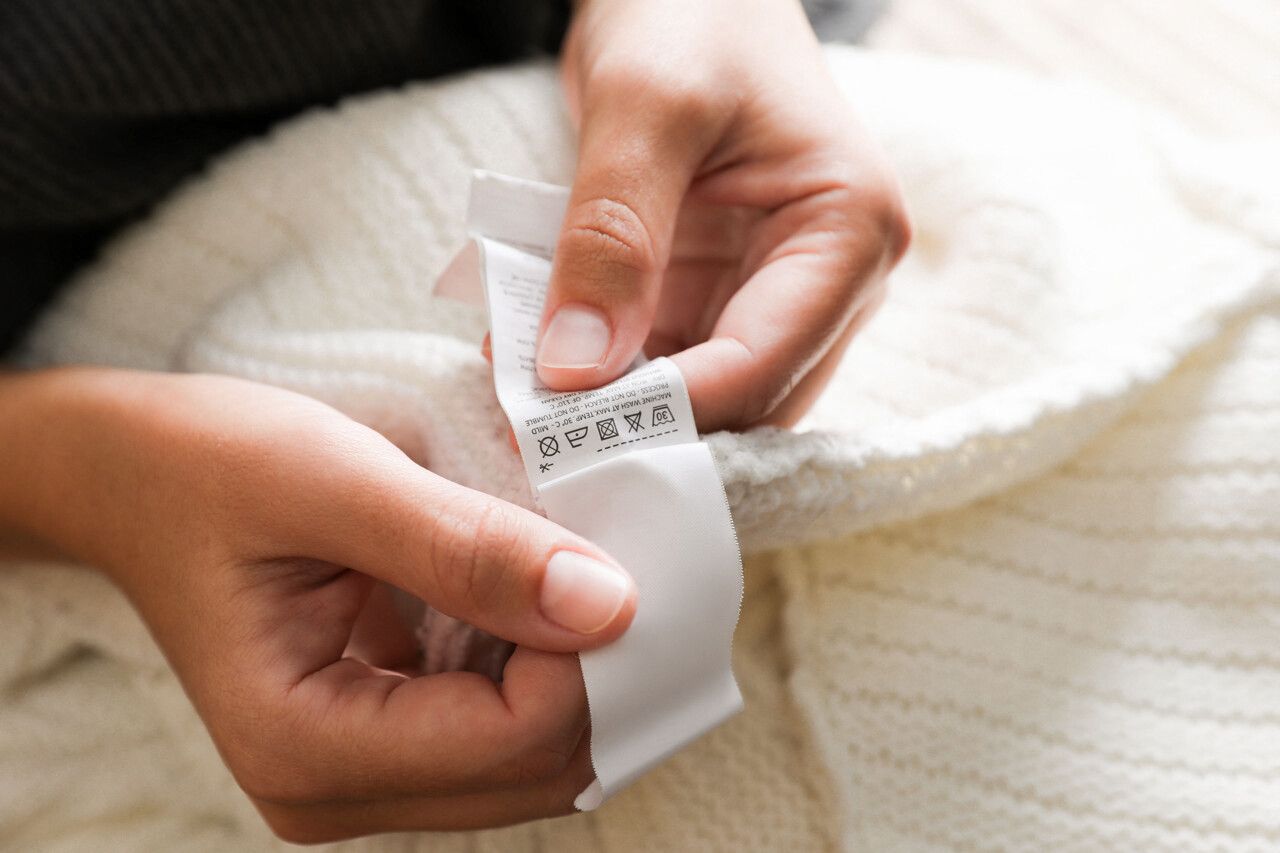
Sources: Regulation (EU) 2024/1781, Art. 9 to 11; European Commission, "Textile and apparel" passport page, checked on 12 November 2026 (photo: Atlantic Ambience, Pexels, cropped).
The points left to the delegated act
Several points remain open as of 12 November 2026. The act will set the level of the passport (one per model, per batch or per item), who sees what among the consumer, the recycler and the authority, and any environmental data with its calculation method. The Commission is preparing the act with a technical study by the Joint Research Centre (JRC), which has consulted stakeholders.
Nothing indicates that the passport will take up the French environmental cost (coût environnemental, also known as the French eco-score) calculated with Ecobalyse. If the act requires a footprint, it will set its own method, and the calculation method for passport data shows what this choice changes for a brand.
4Which data carrier on the garment: QR, NFC or RFID?
The ESPR requires a data carrier on the product, its packaging or its documentation, linked to a unique identifier. The Commission gives the QR code as an example, and the delegated act will choose the data carrier required.
Per model or per item
A QR code printed on the care label costs little, can be read with any phone and is enough for a passport per model. An RFID tag or an NFC chip gives an identifier per item, useful for tracking in store or for sorting used clothing, but costs more. No public price list compares these data carriers: prices come from label manufacturers and vary with volumes.

The choice between model, batch and item is the weightiest decision in the act for a brand. A passport per item means tracking each garment from the workshop to the customer, which few supply chains can do in 2026.
A label applied before the act
Label manufacturers already sell data carriers presented as ready for the passport. Before the delegated act, no one knows which data carrier, which identifier format or which location it will require. A label sewn in 2026 may have to change in 2029, and garments sold before the date of application will not be affected. The 6-question grid puts the data carrier among the points that can wait.
5What already applies to clothing?
4 rules already affect a garment sold in France, 2 European and 2 French. Each calls for data that the passport will partly take up.
EU obligations
Since 19 July 2026, the ESPR has prohibited large companies from destroying their unsold clothing and footwear, recycling included, unless a derogation applies. Medium-sized companies will follow on 19 July 2030; micro and small enterprises are not covered.
Since 27 September 2026, the EmpCo Directive has governed environmental claims made to consumers, in the countries that have transposed it. A label not based on a certification scheme and a legal requirement presented as an asset are prohibited, as our article on the companies affected by EmpCo explains.
French obligations
Since 1 January 2023, in stages by turnover and volume, the AGEC law (France's Anti-Waste and Circular Economy Act) has required companies placing products on the French market to publish an online product sheet. For a garment, it gives the country where weaving, dyeing and printing, and making-up take place (Decree No. 2022-748). This is already, in another form, the origin information that the passport will ask for.
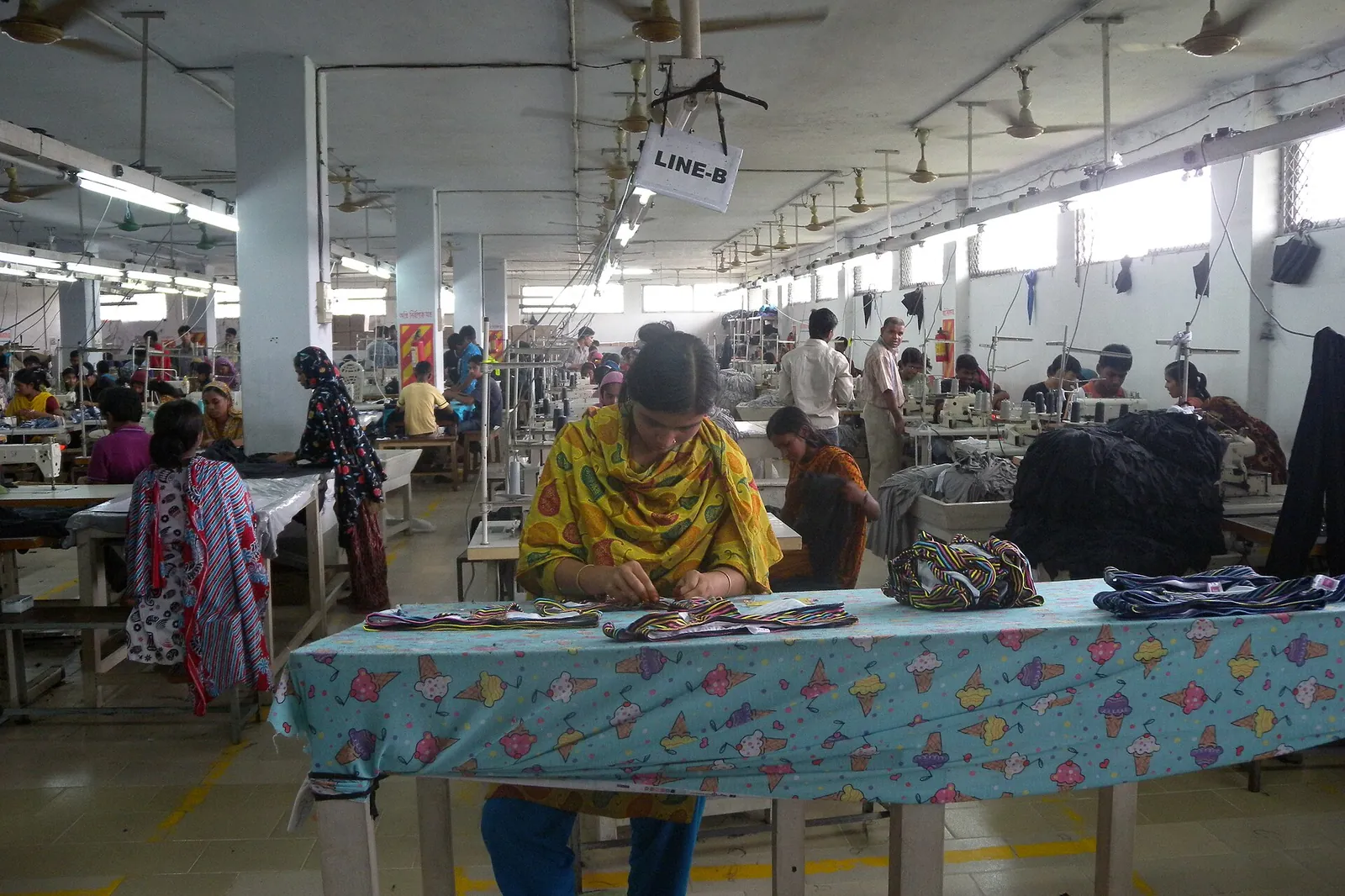
Since 1 October 2025, a brand may display the environmental cost of its clothing in France, on a voluntary basis: our article on environmental labelling of clothing sets out the rules, and the one on labelling since 1 October its timeline. The textile eco-score tools compared on the blog ask for the same composition and the same countries as the AGEC product sheet.
6What should you prepare before the textile delegated act?
The data will be useful whatever the final content of the act. The data carrier and the platform depend on it, and can wait.
The data to gather
4 workstreams are useful now for labelling, for buyers and for the future passport:
- The list of models sold in the Union, with their tier 1 and tier 2 suppliers: garment workshops, weavers, dyers and spinning mills.
- The composition and countries of manufacture of each model, already required for the composition label and for the product sheet required by the AGEC law in France.
- Clauses in supplier contracts that require this data to be passed on, in a defined format and at each change of material or workshop.
- A life cycle assessment or an Ecobalyse calculation on the best-selling models, which shows where the impacts and the missing data lie.
These workstreams overlap with the eco-design of a garment: a brand that knows the material, the country and the energy of its models also knows which ones to change first.
The data carrier and the platform
The choice of data carrier, QR code, NFC or RFID, and of the platform that will host the passports depend on the delegated act. A contract signed in 2026 should at least provide for data portability and an exit if the act requires another data carrier. The furniture passport, whose delegated act is planned for 2028, follows the same reasoning a year later.
For us at Projet Celsius, a clothing brand's priority in 2026 is to gather the data for its 20 best-selling models: composition, country of each step, suppliers and mass. The choice of a label presented as "DPP ready" can wait for the delegated act. This data will serve for labelling, for replies to buyers and for the passport, whatever data carrier the act chooses in 2027.
7Key takeaways
- No text requires a Digital Product Passport for clothing as of 12 November 2026, and no textile delegated act has been adopted.
- The Commission plans to adopt the textile act in the fourth quarter of 2027; with at least 18 months to adapt, the obligation should not apply before mid-2029, by our calculation.
- The passport will be owed by the brand that sells under its own name, or by the importer for a manufacturer established outside the Union.
- The act will set the list of data, the level of the passport (model, batch or item) and the data carrier.
- Composition, origin by step and supplier clauses can be prepared now; the label and the platform can wait for the act.
The Digital Product Passport guide tracks the other product groups, and our article on being ready for the passport gives the grid for checking a product. Our 2-minute tool tells you whether and when a product will have a passport.
- European Commission, "Textile and apparel" page of the Digital Product Passport, consulted on 12 November 2026.
- European Commission, "Digital Product Passport" page, indicative timeline, consulted on 12 November 2026.
- European Commission, Ecodesign and Energy Labelling Working Plan 2025-2030, COM(2025) 187, 16 April 2025.
- European Parliament and Council, Regulation (EU) 2024/1781 of 13 June 2024 establishing a framework for the setting of ecodesign requirements for sustainable products (ESPR): Articles 4, 9 to 13, 25, 27, 29 to 31 and 38, Annex VII.
- European Parliament and Council, Regulation (EU) No 1007/2011 on textile fibre names and related labelling.
- Decree No. 2022-748 of 29 April 2022 on consumer information about the environmental qualities and characteristics of waste-generating products. The Légifrance pages are in French.
- European Parliament and Council, Directive (EU) 2024/825 of 28 February 2024 (EmpCo): Article 4, Annex I, points 2a and 10a.