
Skip to content
Get in touchFR
Updated in May 2026
Explained

Train or plane for business travel: how much CO₂ does each journey emit?

On domestic journeys, the TGV emits 50 to 80 times less than flying, and is at least as fast door to door for journeys under 4 hours. Journey-by-journey figures for building a travel policy.

Guillaume Pakula
By Guillaume Pakula, co-founder of Celsius. Since 2019, he has helped 80+ organisations with their Bilan Carbone® and climate strategy.
February 2026
Updated May 2026 · 7 min
A Paris-Marseille journey emits 2.4 kgCO2e by TGV and around 150 kgCO2e by plane, or 60 times more. In a service company's Bilan Carbone®, switching from plane to train is one of the simplest and most cost-effective substitutions.
Key takeaways
  • 1The TGV emits 50 to 80 times less than flying on domestic journeys.
  • 2For journeys under 4 hours, the train is at least as fast door to door: airports and transfers add 2 to 3 hours to the flight.
  • 3Flying remains artificially cheap: untaxed kerosene, no VAT on international flights, subsidised regional airports.
  • 4Booking early often substantially reduces train fares, which rise as trains fill up.

A Paris-Marseille journey emits 2.4 kgCO2e by TGV, around 120 kgCO2e by car and around 150 kgCO2e by plane: the TGV emits 50 to 60 times less than its alternatives on this journey. France has one of the world's best high-speed networks, but trains retain an image of being slow and expensive, which the figures below help correct.

1Carbon comparison by journey

Here are the comparative emissions, for a one-way trip, on the main business routes from Paris. Source: ADEME's Base Empreinte.

For journeys under 4 hours, the train is at least as fast door to door

Train or plane: emissions and door-to-door time by journey

One way, in kgCO2e per passenger. Door-to-door time (including check-in, security and airport transfers)

JourneyTGV CO2eTGV timePlane CO2ePlane timeRatio
Paris-Lyon1.8 kg2h00100 kg3h30×55
Paris-Marseille2.4 kg3h15150 kg3h45×60
Paris-Bordeaux1.5 kg2h04120 kg3h30×80
Paris-Strasbourg1.3 kg1h4690 kg3h30×70
Paris-Brussels1.0 kg1h2280 kg3h30×80
Paris-London4 kg2h15120 kg4h15×30
French grid 90% decarbonised (nuclear). A TGV emits 50-80× less than a plane.

SNCF, ADEME Base Empreinte

  • Paris-Lyon: 1.8 kgCO2e by TGV (2h), compared with 100 kgCO2e by plane (1h flight, plus 2h30 for the airport and transfers), a factor of 55
  • Paris-Marseille: 2.4 kgCO2e by TGV (3h15), compared with 150 kgCO2e by plane (1h15 flight, plus 2h30 for the airport and transfers), a factor of 60
  • Paris-Bordeaux: 1.5 kgCO2e by TGV (2h04), compared with 120 kgCO2e by plane (1h flight, plus 2h30 for the airport and transfers), a factor of 80
  • Paris-Strasbourg: 1.3 kgCO2e by TGV (1h46), compared with 90 kgCO2e by plane (1h flight, plus 2h30 for the airport and transfers), a factor of 70
  • Paris-Brussels: 1.0 kgCO2e by Eurostar (1h22), compared with 80 kgCO2e by plane (1h flight, plus 2h30 for the airport and transfers), a factor of 80
  • Paris-London: 4 kgCO2e by Eurostar (2h15), compared with 80 kgCO2e by plane (1h15 flight, plus 3h for the airport and transfers), a factor of 20

2Why flying seems cheaper

A one-way Paris-Barcelona flight with a low-cost airline can cost €30, compared with €100 to €200 by train. The comparison is distorted by the tax advantages enjoyed by aviation:

Why flying seems cheaper: invisible subsidies

What each mode pays for, and what it does not pay for

What flying does not pay for
No tax on kerosene (Chicago Convention, 1944)
No VAT on international tickets
Subsidised regional airports
No carbon price on long-haul flights (the EU emissions trading system only covers intra-European flights)
What rail pays for
SNCF Réseau network access charges
Taxes on electricity
Internalised infrastructure costs
VAT on tickets
Kerosene has remained exempt from tax since the Chicago Convention (1944); in 2021, the European Commission proposed taxing it on intra-European flights

DGAC; European Court of Auditors, review 01/2022 on energy taxation

  • Kerosene is not taxed, under the international exemption arising from the Chicago Convention (1944)
  • International airline tickets are exempt from VAT, while rail pays network access charges and taxes on electricity
  • Regional airports are subsidised by local authorities, and the real cost of infrastructure is not reflected in the ticket
  • Intra-European flights pay for their CO2 through the EU emissions trading system (EU ETS), with no free allowances since 2026, but long-haul flights departing from Europe are not covered

If flying paid its real cost (energy, infrastructure and climate effects), the price gap with rail would narrow substantially. In its 2022 analysis of energy taxation, the European Court of Auditors also notes kerosene's exemption, which the Commission proposed removing in 2021 for intra-European flights.

The price of an airline ticket does not reflect its cost: kerosene is not taxed, international tickets escape VAT and regional airports are subsidised.

3Rail yield management: understanding price differences

The same seat can cost €29 or €129 depending on the departure time and how full the train is. SNCF seeks to fill its trains, because a half-empty train consumes almost as much energy as a full one. Attracting flexible travellers to quieter trains with low prices, and leaving peak trains to travellers with limited flexibility at higher prices, makes economic and environmental sense.

In practice, booking predictable journeys early often makes travel cheaper, since prices rise as trains fill up. A corporate contract negotiated with SNCF can add discounts on public fares, depending on travel volume.

4Night trains for journeys of 4 to 8 hours

For journeys of 4 to 8 hours without a fast TGV alternative, the night train is an option, although services from Paris remain limited:
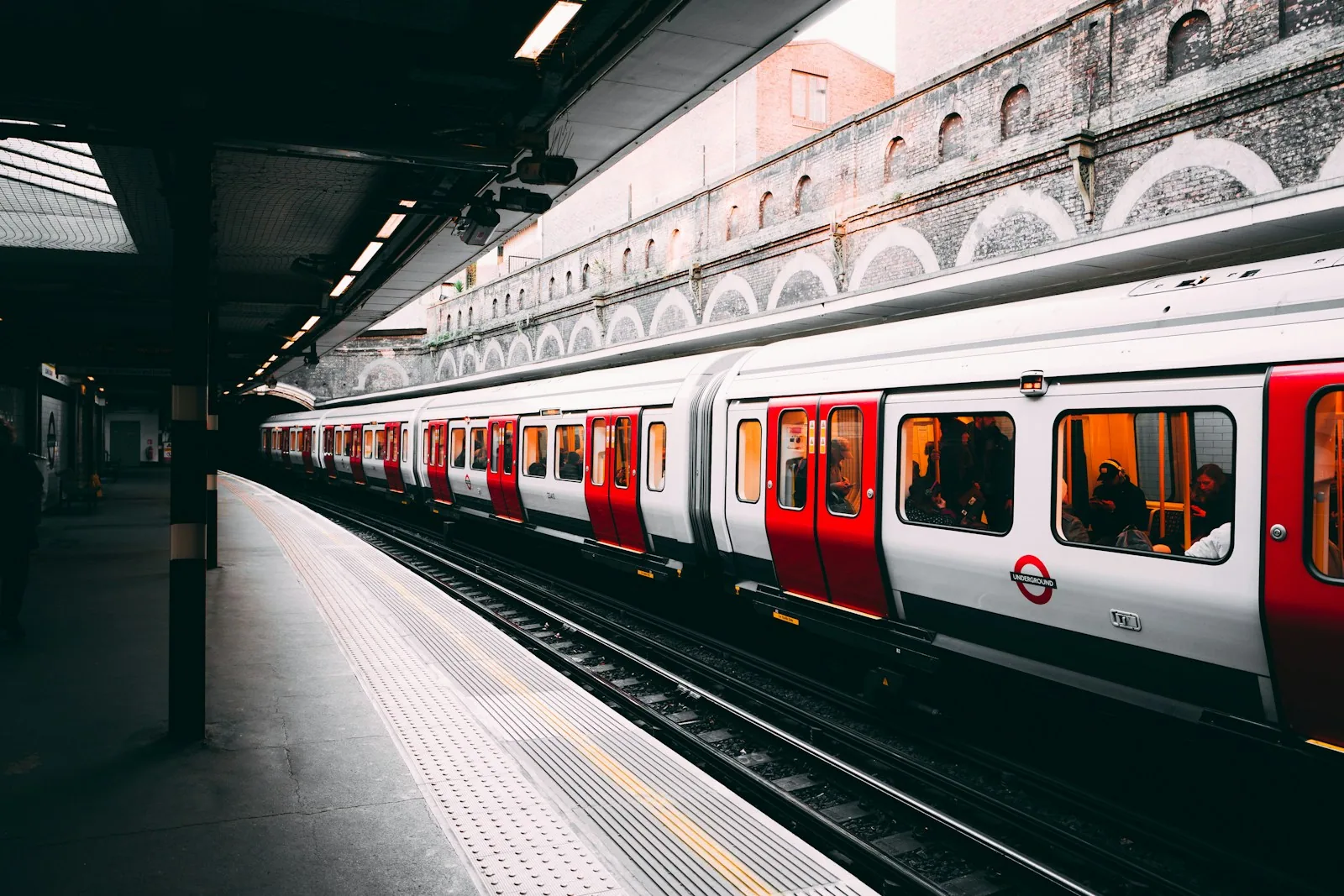
Station platform at night with a stationary train
  • Paris-Berlin, relaunched by European Sleeper on 26 March 2026: 3 return journeys per week via Brussels and Hamburg, arriving in the city centre in the morning
  • Paris-Nice, Paris-Toulouse and Paris-Briançon, in couchettes, on SNCF's Intercités de nuit services
  • Paris-Cerbère, as far as the Spanish border, in the absence of a direct night service to Barcelona
  • Nightjet (ÖBB), Europe's most extensive network, no longer serves Paris since Paris-Vienna ended on 14 December 2025
  • The French hotel-train project Midnight Trains was abandoned in 2024 for lack of funding

The economic calculation is often favourable: the additional cost of the night ticket is offset by saving a hotel night (€80 to €150), and the employee arrives rested in the city centre rather than at an airport on the outskirts.

5Building a train-first travel policy

Here are the rules we consistently recommend, and which the companies we support are increasingly adopting:

  • Train by default for journeys under 4 hours (Paris-Lyon, Brussels, London, Strasbourg and Bordeaux), since flying saves no door-to-door time on these routes
  • Night train between 4 and 8 hours, where a service exists and the journey can be planned
  • Plane only beyond 8 hours or without a reasonable alternative, asking before booking whether the meeting really requires travelling in person
  • A corporate contract negotiated with SNCF, with discounts on public fares that depend on travel volume
  • Booking predictable journeys as early as possible, as SNCF fares rise when trains fill up

6Key takeaways

The TGV is one of the world's lowest-emitting modes of transport per passenger-kilometre. For journeys under 4 hours, it performs at least as well as flying in door-to-door time, with vastly lower emissions. A train-first policy is one of the simplest measures in an emissions reduction strategy.

  • The TGV emits 50 to 80 times less than flying on domestic journeys
  • For journeys under 4 hours, the train is at least as fast door to door, as checks and transfers add 2 hours or more to the flight
  • Flying remains artificially cheap: untaxed kerosene, no VAT on international tickets, subsidised regional airports
  • Booking early often substantially reduces train fares, which rise as trains fill up
  • The night train saves a hotel night and allows you to arrive rested in the city centre, but services from Paris remain limited

Further resources

Frequently asked questions

TGV punctuality is around 90%, comparable with flying when delays, cancellations and missed connections are included. In the event of a delay, the traveller still arrives in the city centre.
SNCF offers negotiated contracts to companies, with discounts on public fares that depend on travel volume. Some also include benefits for ticket exchanges and flexibility.
Yes. The TGV runs on the French electricity grid, which is more than 90% decarbonised. A Paris-Marseille journey emits 2.4 kgCO2e by TGV compared with 150 kgCO2e by plane. The gap is even greater than with an electric car, because steel-on-steel contact and the number of passengers carried make the train much more efficient per traveller.
For long journeys (Paris-Toulouse in 4h30, Paris-Nice in 5h45) or journeys with a connection, the carbon footprint remains very favourable to rail. The question becomes how much time is acceptable for the company: beyond 4 hours, the decision is made case by case, and the night train is an option on some routes.
The Bilan Carbone® documents emissions by transport mode and journey. This provides the basis for quantified modal shift targets (for example, moving from 30% to 80% rail on journeys under 4 hours in 2 years) and measuring their results.
The company acts first through its travel policy. The most effective rule is rail by default for journeys under 4 hours, where flying has no door-to-door advantage, then night trains between 4 and 8 hours where services exist, and flying only beyond that or without a reasonable alternative. 2 measures make this rule acceptable: a corporate contract negotiated with SNCF and advance booking of predictable journeys. Bilan Carbone® then measures the modal shift achieved in business travel.
No, it is unbeatable within a specific range. For journeys under 4 hours (Paris-Lyon, Paris-Bordeaux, Paris-Strasbourg, Paris-Brussels and Paris-London), it is faster than flying door to door and emits 20 to 80 times less. Between 4 and 8 hours, night trains can take over where services exist, saving a hotel night, but the network remains limited: Paris-Vienna ended on 14 December 2025, and Paris-Berlin only resumed in March 2026 with European Sleeper, 3 times a week. Beyond 8 hours, or without a reasonable alternative, flying often remains the only option.
or: [email protected]

More articles to read

View all →
French environmental cost label for clothing: what changed on 1 October 2026
Regulation

French environmental cost label for clothing: what changed on 1 October 2026

6 min read
Which garments can display an environmental cost in France? Timeline and thresholds, 2025-2027
Regulation

Which garments can display an environmental cost in France? Timeline and thresholds, 2025-2027

10 min read
Removable batteries and battery passports: who is affected in 2027?
Regulation

Removable batteries and battery passports: who is affected in 2027?

14 min read

No two situations are exactly alike.

Tell us about yours: your situation, deadline and budget. A senior consultant will reply within 24 working hours with an honest assessment.

Let us discuss it within 24 hours →
Our toolkit

A full range of free assessment tools

Cost estimator, obligation and eligibility checkers, footprint calculator.

Estimate costs and impacts
Ref. 2026·BC·0184REPORT · FINANCIAL YEAR 2026Bilan Carbone®complete 1·2·3Presentation to the Executive Committee · 2027 action planCONTENTS01Executive summaryp. 402Scope and methodologyp. 1203Emissions by scopep. 24042027 action planp. 5605Methodological appendicesp. 78VOLUME84 pages · ConfidentialSTANDARDISO 14064 · GHG ProtocolQUOTATION · BC.2026.0184Issued 05·05·2026 · Valid for 30 daysCelsius consultancy · Paris 3rd arrondissementINDICATIVE COST ESTIMATEYour companyMid-sized company · 180 employees · CSRD 2027SERVICEBilan Carbone®Scope 1·2·3 · 13 weeksBPIFRANCE FUNDING · - 60%INDICATIVE RANGE EXCL. VAT€16,800to €22,400PROJECT DETAILS01 · SCOPING3 weeks~€4,20002 · MODELLING8 weeks~€9,80003 · PRESENTATION2 weeks~€4,800Indicative estimate · Refined after scopingSIRET 891 234 567 00012

Bilan Carbone® cost estimator

Your price range in 1 minute, based on 2026 market rates and public funding.

1 minStart
Estimate costs and impacts
AI FOOTPRINT · MONTHLY USEYOUR TOTAL FOOTPRINT4.2 kgCO₂eq for 1,000 typical prompts · May 2026MODEL COMPARISON · 1,000 TYPICAL PROMPTSGPT-4oOpenAI6.8 kgClaude OpusAnthropic2.1 kgGemini ProGoogle4.5 kgMistral LargeMistral AI · FR1.6 kg

AI carbon footprint calculator

The climate impact of your AI queries, by model and task. Ecologits methodology.

3 minStart
Check an obligation
DIAGDÉCARBON'ACTIONACCELERATE THETRANSFORMATIONOF YOUR COMPANYIN ENERGY ANDTHE ENVIRONMENTOFFICIAL SCHEME · BPIFRANCE × ADEMECHECKER · ELIGIBILITYELIGIBLEYou meet the 3 Diag Décarbon'Action criteria.YOUR FUNDING€10,000 excl. VAT€6,000excl. VATAmount payable by you after the Bpifrance subsidyFUNDING BREAKDOWNBPIFRANCE 40%YOU 60%€4,000€6,000SCHEME SUBSIDISED BY

Diag Décarbon'Action eligibility

Check in 30 seconds whether your business is eligible for Bpifrance funding covering 40% of a Bilan Carbone® assessment.

30 secStart
Check an obligation
FRENCH REPUBLICMinistry for the Ecological TransitionLEGAL REQUIREMENTGreenhouse GasEmissions AssessmentArticle L.229-25 of the French Environmental CodeDecree 2022-982 · published 1 July 2022FREQUENCY · 4 YEARSFILING · ADEMECHECKER · BEGES REQUIREMENTREQUIRED720 employees · BEGES requirementPOTENTIAL PENALTY€50,000maximum fine for failing to complete itart. R.229-50OFFICIAL REFERENCE

BEGES checker

Does the BEGES requirement apply to you? An immediate answer, with the deadline and penalty.

30 secStart
Check an obligation
9:42SCANSCANNING DPP...DPP IDENTIFIEDOrganic cotton T-shirtSKU TX-CB-220 · Batch L-26-04781ESPR COMPLIANT42 DATA POINTS · 5 SECTIONSORIGINIndia · GOTSOrganic cottonFOOTPRINT5.2 kg CO₂eqLCA ISO 14040RECYCLABILITY85%Cotton recycling schemeREPAIRABILITY7.5 / 10Accessible partsEND OF LIFETextile recycling scheme (TLC) · Bordeaux/FRRefashion-approved recovery operatorEU · ESPR 2024/178112.05.2026

DPP checker

Is your product covered by the Digital Product Passport?

1 minStart
Check an obligation
COSTENVIRONMENTAL386POINTS257PER 100 GOfficial methodEcobalyse, v7.0.0CHECKER · ENVIRONMENTAL LABELLINGELIGIBLETextiles · voluntary labellingENVIRONMENTAL COST386 ptsT-shirt 150 g · 257 pts per 100 gExample: Ministry for the Ecological Transition FAQ

Textile environmental labelling 2026

Voluntary labelling, but third parties can publish it from October 2026: where do you stand?

1 minStart