
- 1A Paris-New York return journey emits around 2 tCO2e, a Paris-Sydney journey around 6 tCO2e.
- 2The 4-hour rule eliminates flying wherever the train is just as fast door-to-door.
- 3Video meetings by default eliminate a large share of business travel.
- 4Flying is artificially cheap: untaxed kerosene, no VAT on international flights, subsidised regional airports.
Return journey emissions from Paris, by destination
In tCO2e per passenger, including non-CO2 effects. Reference point: a budget compatible with +2°C represents around 2 tCO2e per person per year
ADEME, Base Empreinte (225 gCO2e/km for short-haul, 178 gCO2e/km for long-haul)
Before defining a travel policy, you need the orders of magnitude in mind. The emissions below are calculated using ADEME Base Empreinte emission factors, which include contrails and other non-CO2 effects: these effects roughly double aviation's climate impact compared with CO2 alone.
1CO₂ emissions by destination from Paris
These figures use the ADEME emission factors we apply in our Bilan Carbone® assessments. They cover a return journey, including non-CO2 effects, using 225 gCO2e per passenger-km for short-haul and 178 gCO2e for long-haul.
- Paris-London: around 0.16 tCO2e by plane, compared with 0.01 tCO2e by Eurostar, more than 10 times less. Eurostar is also faster door-to-door (2h15 city centre to city centre, compared with 3h30 by plane including checks and transfers)
- Paris-Barcelona: around 0.4 tCO2e by plane, compared with 0.01 tCO2e by train (6h30), around 30 times less. On the train, travellers can work throughout the journey
- Paris-New York: around 2 tCO2e, without a land alternative. This is the entire annual carbon budget compatible with +2°C (2 tCO2e per person)
- Paris-Singapore: around 3.8 tCO2e, nearly 2 times the annual budget compatible with +2°C
- Paris-Sydney: around 6 tCO2e, or 3 times a person's annual carbon budget in a single journey
2How much aviation contributes to a company's carbon footprint
Take a service-sector SME with 200 employees and an executive committee of 8 people. If each executive committee member makes 2 European return journeys and 1 intercontinental return journey per year, the total reaches around twenty tCO2e. For a service company of this size, this is only a few per cent of the total Bilan Carbone®, but these emissions are concentrated among 4% of the workforce, making this a category that is easy to manage.
How much aviation contributes to an SME's footprint
Service-sector SME with 200 employees: the executive committee (8 people) makes 24 return journeys per year
Celsius estimates, for an assessment of 600 to 1,000 tCO2e (3 to 5 tCO2e per employee)
This pattern recurs in most of our engagements with service companies. Aviation is an easy reduction opportunity to act on because it is concentrated (few people, many emissions) and alternatives exist for some journeys.
33 rules to reduce aviation emissions
1. The 4-hour rule: train mandatory below 4h
Paris-Lyon (2h), Paris-Brussels (1h22), Paris-London (2h15), Paris-Strasbourg (1h46), Paris-Bordeaux (2h04): on these routes, flying saves no door-to-door time once checks, boarding and airport transfers are included, and emits at least 10 times more. This is the easiest rule to get accepted, since it costs nobody any time.
2. The annual carbon allowance per employee
Each employee has a carbon budget for travel. They are free to allocate it, but once it is exhausted, meetings are by video. The rule encourages responsibility without prohibiting travel and prompts choices between a strategic commercial trip and an internal meeting that a video call could replace.
3. Video meetings by default
The instinct to "meet in person" remains strong, especially in France. Reversing the norm by holding video meetings unless being there is essential eliminates a large share of travel, starting with internal meetings. This is the most far-reaching change, and the least costly.
A one-way Paris-Barcelona journey emits nearly 200 kgCO2e by plane and around 6 kgCO2e by train, for around 3 extra door-to-door hours.
4The night train: the underestimated option for 4 to 8 hours
For journeys of 4 to 8 hours without a fast TGV alternative, the night train is an option, although services from Paris remain limited. With Paris-Berlin, relaunched by European Sleeper in March 2026, or Intercités night trains to Nice, Toulouse and Briançon, employees leave in the evening, work or sleep, arrive in the city centre in the morning and save a hotel night.
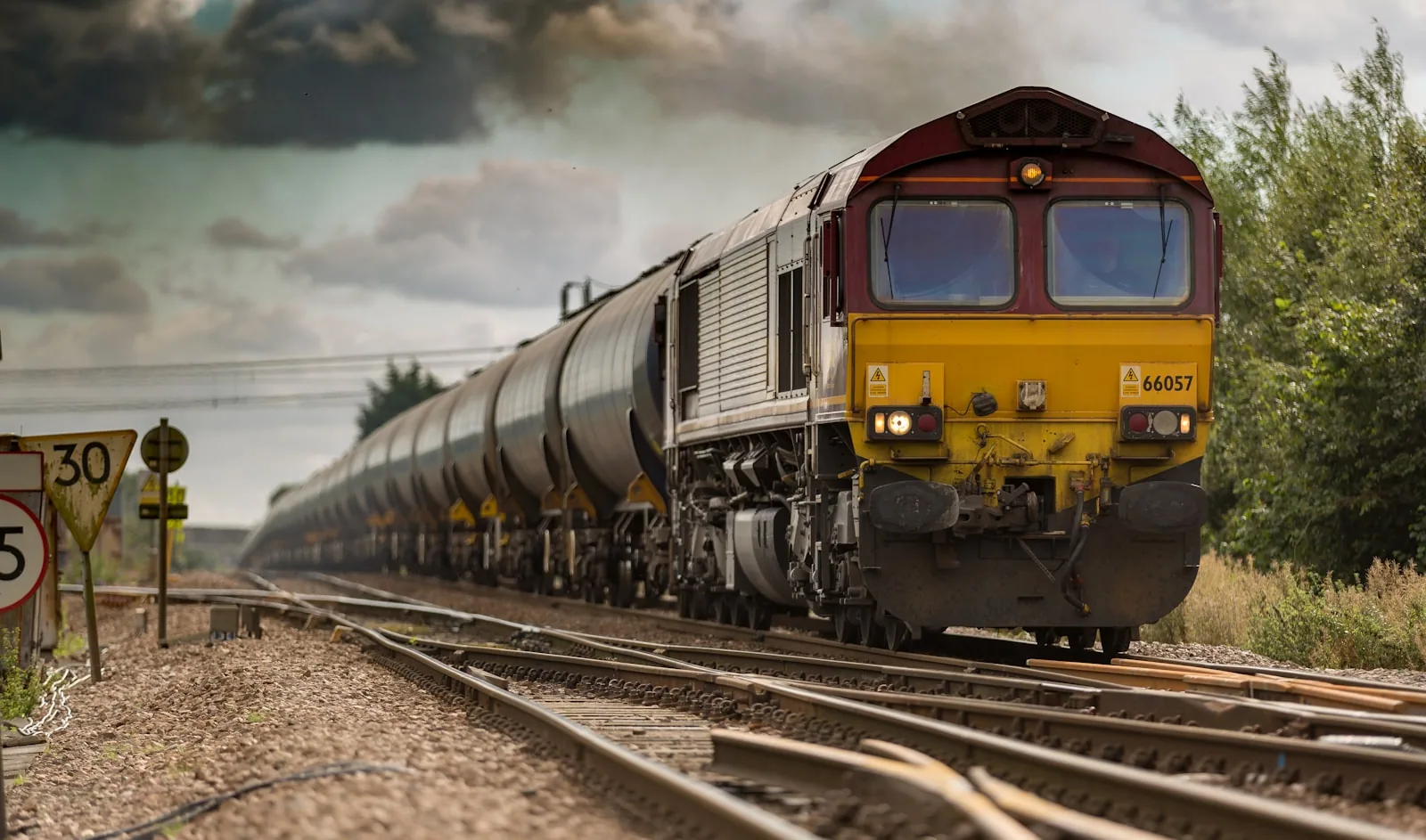
Services are expanding again in Europe (ÖBB Nightjet, European Sleeper), although they remain insufficient, and the French Midnight Trains project was abandoned in 2024. Beyond 8 hours with no alternative, flying remains relevant, and the question to ask before booking concerns the meeting itself: does it require physical travel?
5Why flying seems cheaper than the train
A low-cost Paris-Barcelona flight can cost €30, compared with €100 to €200 by train, but taxation and subsidies distort the comparison:
- Aviation pays no tax on kerosene (international exemption since 1944)
- International airline tickets are exempt from VAT, while trains pay network access charges and electricity taxes
- Regional airports are subsidised by local authorities, and the actual infrastructure cost is not included in the ticket
- Intra-European flights pay for their CO2 through the European emissions trading system (EU ETS), without free allowances since 2026, but long-haul flights departing Europe are not subject to it
If aviation paid its actual cost (energy, infrastructure, climate effects), the price gap with the train would narrow substantially. In its 2022 review of energy taxation, the European Court of Auditors notes the exemption for kerosene, which the Commission proposed removing in 2021 for intra-European flights.
6Key takeaways
Aviation is the most carbon-intensive transport mode and the most concentrated in companies (few travellers, many emissions). 3 simple, free measures can substantially reduce this category.
- A Paris-New York return journey emits around 2 tCO2e, a Paris-Sydney journey around 6 tCO2e, and Paris-London by Eurostar more than 10 times less than by plane
- The 4-hour rule eliminates flying on routes where trains are just as fast door-to-door, at no cost and with an immediate effect
- Video meetings by default eliminate a large share of travel, and represent the most far-reaching change
- Flying remains artificially cheap: untaxed kerosene, no VAT on international flights, subsidised regional airports
- A Bilan Carbone® precisely quantifies this category and enables reductions to be tracked from one year to the next