
- 1ETS2, the second European carbon market, will apply to fuels and heating from 2028.
- 2Energy suppliers buy allowances and pass the cost on to their customers.
- 3At €45 per tonne, a litre of diesel will add about 11 cents.
- 4Quantify your exposure from 2026 using fuel and heating bills.
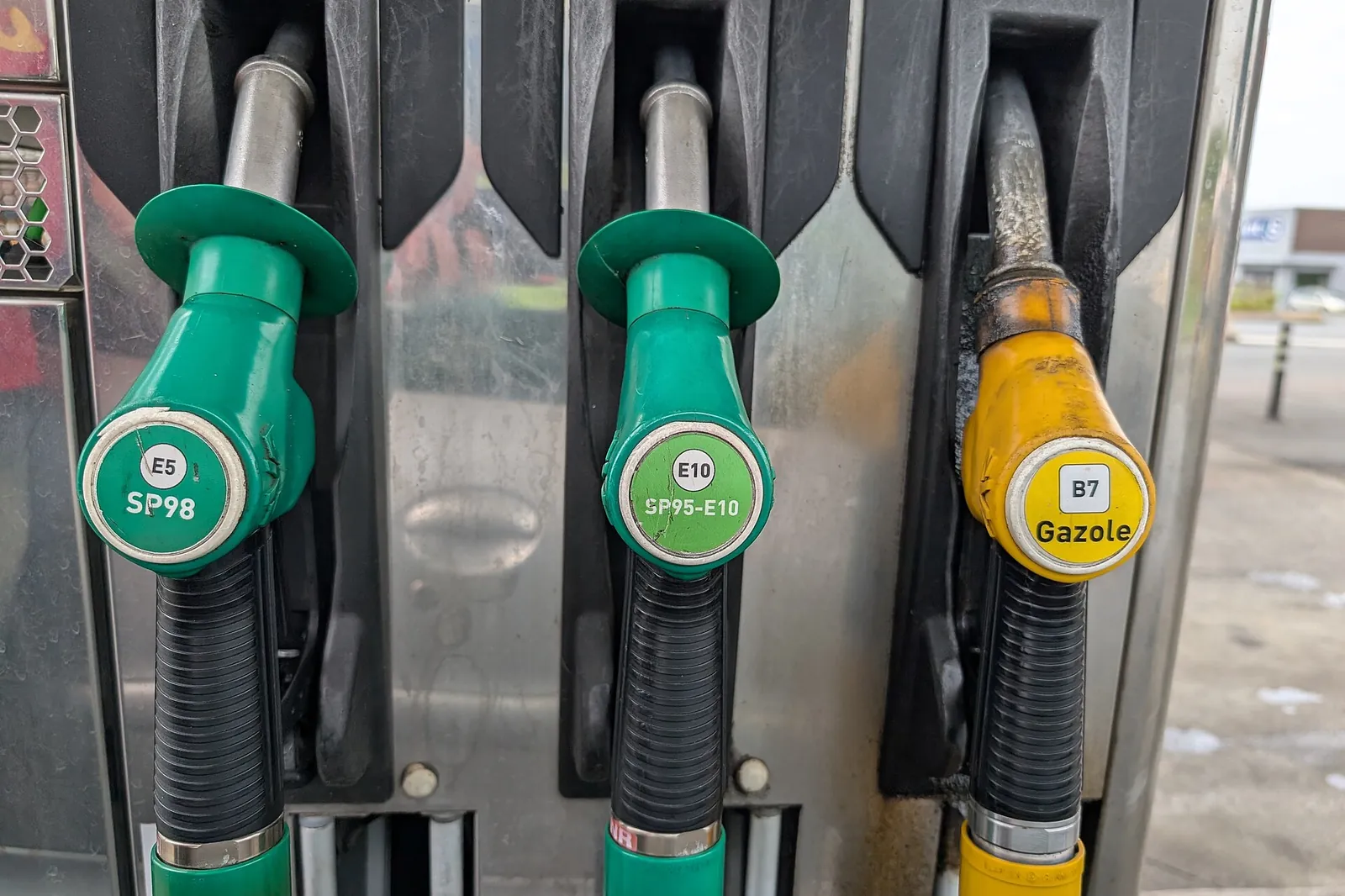
On 22 September 2026, the government again expanded its support for "high-mileage drivers" in response to the persistent rise in fuel prices following the blockage of the Strait of Hormuz. Yet another increase is already scheduled: from 1 January 2028, fuel suppliers will have to cover every tonne of CO2 their customers burn, on roads and in buildings, with allowances. At €45 per tonne, the reference written into the European directive, this represents about 11 cents per litre of diesel and €8 per MWh of gas, excluding VAT.
What ETS2 adds per litre and per MWh, depending on the allowance price
Additional cost excluding VAT that suppliers will pass on from 2028, compared with the excise duty paid today on each energy source.
This new carbon price is called ETS2, or SEQE 2 in French legislation. It has already been delayed by a year, its price will be known only at auction, and France has not yet said how it will interact with its own taxes. The calculations below apply DGEC's official emission factors to 3 allowance prices, for the energy a business buys: fuel for its fleet, gas or heating oil for its buildings and workshops.
1What is ETS2, the European "carbon tax"?
ETS2, the emissions trading system for buildings, road transport and additional sectors, was created by Directive (EU) 2023/959, which adds Chapter IVa to the 2003 directive on the European carbon market. It complements the existing market, ETS1, which has covered power plants and large industry since 2005, then aviation and maritime transport, and whose price provides the basis for the Carbon Border Adjustment Mechanism.
An allowance market paid for upstream
Legally, ETS2 is a cap-and-trade system, with no legislated rate as for a tax: each year, the Union sets a number of allowances, decreasing to cut these sectors' emissions by 42% in 2030 compared with 2005, and auctions them; 1 allowance gives the right to emit 1 tonne of CO2. The price is formed on the market and varies from week to week.
The system targets the upstream end of the chain. In France, regulated entities are those releasing petroleum products for consumption and suppliers of gas and coal liable for energy excise duties, the Ministry for Ecological Transition explains, with no minimum threshold. They already report emissions associated with their sales; from 2028, they will surrender 1 allowance per tonne. A customer business will have no allowances to buy: it will pay their cost in the energy price, just as it currently pays excise duty without declaring it.
The energy sources and uses covered
ETS2 covers CO2 from burning fossil fuels in 4 groups of uses:
- Road transport: all fuels for road vehicles, cars, vans, lorries and coaches, whether the vehicle belongs to a household or a business.
- Buildings: gas, heating oil and coal burned for heating, hot water or cooking, in homes as well as offices, shops, hospitals or schools.
- Construction: non-road diesel for construction machinery.
- Small industry: fuels used by sites outside ETS1, most often those whose combustion capacity remains below 20 MW.
Electricity, whose generation already falls under ETS1, agricultural fuels, rail, inland waterways, maritime and air transport, and firewood remain outside the system. Biofuels and biogas count as zero if they meet European sustainability criteria. Only CO2 is covered: ETS2 ignores the methane and nitrous oxide that a Bilan Carbone® adds together in CO2e.
22027 or 2028: a delayed start, auctions from January 2027
The 2023 directive provided for operation to begin in 2027. Regulation (EU) 2026/667 of 11 March 2026, which writes a target of -90% net emissions in 2040 compared with 1990 into the European Climate Law, delayed it to 2028, applying the postponement rules already provided in the directive for exceptionally high energy prices.
What the delay changed
The first allowance cap now concerns 2028, and the first surrender deadline is 31 May 2029, for emissions in 2028. A diesel supplier will therefore have no allowances to surrender for fuel sold in 2027: the cost will enter prices with 2028 deliveries. Reporting obligations are already running, with a report on the previous year's emissions submitted every 30 April since 2025, verified by an accredited body since 2026.
Why auctions precede the obligation
In principle, the directive also postpones the start of auctions to 2028, but the European Commission, relying on its auctioning regulation, is scheduling early auctions from January 2027 on the EEX exchange to generate revenue sooner; it announced that their calendar would be published by September 2026 at the latest. The market will thus have an initial price a year before the obligation. The 2028 allowances will be auctioned with a volume 30% above the planned volume to ensure liquidity, and a market stability reserve of 600 million allowances may be used if the price surges.
ETS2 deadlines after postponement to 2028
Energy suppliers already report their emissions; the allowance price enters bills only from 2028.
3How much will ETS2 add per litre of diesel and per MWh of gas?
The calculation starts with public data: the quantity of CO2 released by burning a unit of energy. For ETS2, DGEC publishes default factors, prepared by Citepa, which suppliers use in their reports; simply multiply them by the allowance price.
The calculation, energy source by energy source
- Diesel: 2.64 kg of CO2 per litre of fossil diesel, or about 2.47 kg for B7 diesel, whose 7% biodiesel counts as zero.
- Petrol: 2.41 kg per litre of fossil petrol, about 2.17 kg for SP95-E10, which contains 10% ethanol.
- Natural gas: 181 kg per MWh, expressed on a gross calorific value (GCV) basis, the unit used on gas bills.
- Heating oil: 2.64 kg per litre, like diesel, to which it is chemically very close.
At €45 per tonne, a litre of B7 diesel therefore adds 11.1 cents (2.47 kg multiplied by €45 per tonne), a litre of SP95-E10 9.8 cents, a MWh of gas €8.2 and a litre of heating oil 11.9 cents, excluding VAT. At €70, a level close to futures traded in 2026, allow for 17 cents per litre of diesel and €12.7 per MWh of gas; at €120, an order of magnitude from projections published in 2025 for 2030, nearly 30 cents and €22.
Heating more exposed than fuel
Relative to current taxation, the increase carries different weight. Excise duty on diesel reaches 60.75 cents per litre: the 11 cents from ETS2 at €45 represent 18% of this. Heating oil and natural gas are taxed at 16.66 cents per litre and €16.66 per MWh as at 1 August 2026, according to the 2026 energy taxation guide: the same increase is equivalent to 71% and 49% of excise duty respectively.
Per tonne of CO2, current excise duty is already equivalent to about €246 on diesel, but €92 on gas and €63 on heating oil. A uniform carbon price such as ETS2 therefore weighs proportionally far more on heating than on road transport, and businesses heating premises or workshops with oil are the most exposed.
At €45 per tonne, the ETS2 additional cost is equivalent to 18% of current excise duty on diesel, 49% on gas and 71% on heating oil: heating is more exposed than fuel.
The CO2e trap
ETS2 factors differ from those of a Bilan Carbone®. ADEME's Base Empreinte counts 3.10 kgCO2e per litre for diesel, including extraction, refining and transport, as explained in our guide to a road haulier's Bilan Carbone®. Multiplying this factor by the allowance price would overestimate the ETS2 bill by about 25%: only combustion is covered, in CO2 and for its fossil share, with upstream emissions falling under the business's scope 3.
4What a business will pay: 3 quantified cases
A business's ETS2 bill depends on 2 volumes it already knows: fuel consumed by its vehicles and fossil energy burned in its buildings and processes. Each example uses DGEC factors and common consumption assumptions, to be replaced with the business's own volumes.
A fleet of 50 vans
Take 50 light commercial vehicles, each travelling about 25,000 km per year at 8 litres per 100 km, giving 100,000 litres of diesel and 247 tonnes of CO2 covered by ETS2. The additional bill reaches €11,100 excluding VAT per year at €45 per tonne, €17,300 at €70 and €29,600 at €120, or €220 to €590 per vehicle. The calculation intersects with the fleet greening obligation, which already encourages electric vehicle renewal, and employees' mobility constraints outside cities.
A haulier with 20 heavy goods vehicles
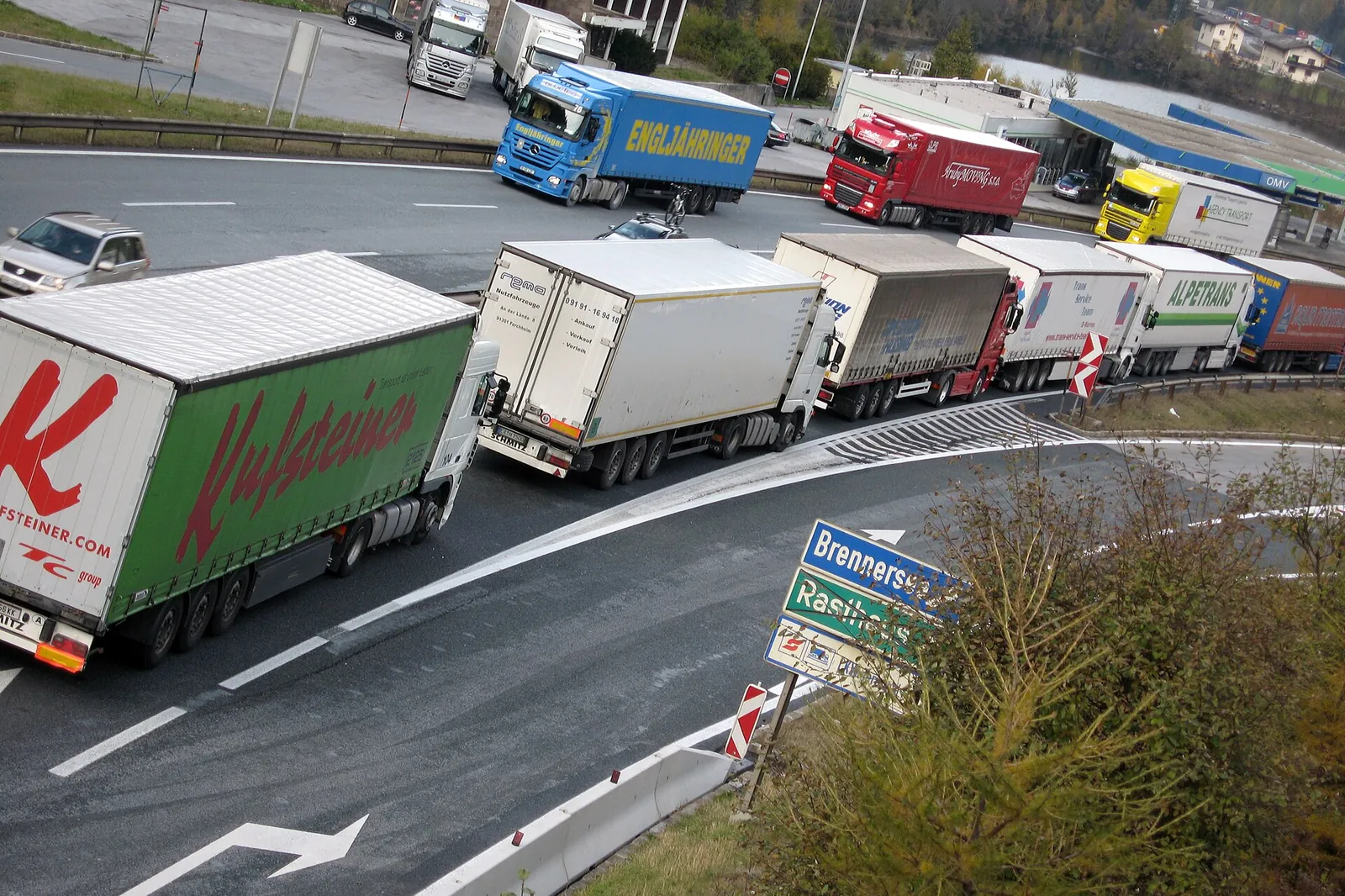
A tractor unit travelling 100,000 km per year at 32 litres per 100 km consumes 32,000 litres of diesel. For 20 lorries, that means 640,000 litres, 1,580 tonnes of CO2 and a bill of €71,000 per year at €45, €110,500 at €70 and nearly €190,000 at €120. With narrow margins, this additional cost is expected to pass back to shippers through the diesel indexation required by the Transport Code in road freight contracts.
Gas-heated offices and a workshop outside ETS1
An office building burning 800 MWh of gas per year emits 145 tonnes of CO2: ETS2 will cost it €6,500 per year at €45 and €10,150 at €70. An industrial SME consuming 5,000 MWh of gas in furnaces or boilers outside ETS1 will pay about €40,800 at €45 and more than €63,000 at €70, an amount to compare with the energy categories identified by a production site's Bilan Carbone®.
These sites are also targeted by the tertiary buildings decree and the mandatory energy audit: the energy savings they require reduce the future allowance bill accordingly.
Estimate what ETS2 will cost your business each year
Enter your annual consumption or start with an example: the result is the additional cost excluding VAT passed on by your suppliers from 2028.
Examples: 2,000 litres of diesel per van; 100,000 km at 32 litres per 100 km per heavy goods vehicle; 800 MWh of gas for the offices.
17,270€ excl. VAT per year
247 tonnes of CO2 covered, or 1,440 € per month
5What allowance price should you use for 2028 and beyond?
The ETS2 allowance price will be formed at auction, but the directive governs its early years through several stabilisation mechanisms, which the Union is preparing to strengthen.
A €45 safeguard, being strengthened
If the average price exceeds €45 per tonne for 2 consecutive months, 20 million allowances are taken from the market stability reserve and released onto the market. This threshold is expressed in 2020 euros and indexed to European inflation, bringing it to about €56.5 in 2025 euros according to Eurostat's price index; it applies until 31 December 2029. Other, larger releases are provided for if the price doubles or triples within a few months.
A decision voted through by the European Parliament on 15 September 2026, following an agreement with the Council in June, increases the volume released to 40 million allowances, up to 2 times a year, extends the validity of reserve allowances beyond 2030 and makes releases more gradual. The Council must still formally adopt it before publication in the Official Journal. The mechanism adds supply without setting a maximum price: the market price may remain above the threshold if demand for allowances justifies it.
What the market and projections say
Futures on ETS2 allowances, still thinly traded on the ICE exchange, stood at €66.55 per tonne for delivery in December 2027 on 18 September 2026, above the indexed threshold. In 2021, the Commission estimated the 2030 price at €48 to €80 depending on its scenarios; the 3 studies published in 2025 listed by the Jacques Delors Institute put it between €105 and €126, and scenarios published in 2024 reach €259. Germany, which already applies its own CO2 price to fuels and heating, sets it between €55 and €65 in 2026.
For budgeting, using €45, €70 and €120 reasonably brackets the early years without constituting a forecast. The industrial market allowance, which traded at nearly €87 on 18 September 2026 for delivery in December, is a reminder that a European carbon price can remain above initial estimates for a long time.
The ETS2 allowance price compared with other carbon prices, in euros per tonne of CO2
The dashed line marks the ETS2 safeguard: €45 in 2020 euros, or about €56.5 in 2025 euros.
Current or anticipated prices
Current excise duty per tonne of CO2
6ETS2 will be added to France's carbon tax
Since 2014, France has included a carbon component in its energy excise duties. The trajectory was supposed to bring it to €100 per tonne in 2030; after the social movement in autumn 2018, rates were maintained at their 2018 level, corresponding to €44.60 per tonne. This component has never been a separate tax: it was used to set excise rates between 2014 and 2018, and the government itself calls it "informal".
Addition without compensation written into legislation
Nothing in the legislation provides for a reduction in excise duties when ETS2 begins: unless Parliament decides otherwise, the allowance price will be added to existing taxes. The Court of Auditors highlighted this addition as early as June 2024 and recommended quickly determining the changes needed to energy taxation.
The 2027 Finance Bill, expected to be presented to the Council of Ministers in early October, was not public as at 28 September 2026. On 22 September, the government announced that it would include a "golden rule" neutralising surplus VAT and excise receipts caused by rising fuel prices, without mentioning ETS2. It will also start a few months after the presidential election, a timetable detailed in our article on environmental obligations that may change in 2027.
A European exemption that is difficult to access
The directive allows a State to exempt suppliers already subject to a national carbon tax until the end of 2030, under strict conditions: the tax must have been notified to the Commission by 31 December 2023 at the latest, rates for 2027 to 2030 set by a law in force on that date, and the amount actually paid higher than the average ETS2 auction price. According to the Jacques Delors Institute, Ireland, whose carbon tax is due to reach €100 per tonne in 2030, has applied. The ministry's ETS2 page does not mention this route for France, whose informal carbon component, frozen at €44.60, remains below allowance futures prices.
7Where to start: quantify your exposure from 2026
ETS2 creates no administrative procedure for customer businesses. The work concerns budgets and strategy, and can be prepared with data the business already holds:
- Gather volumes: fuel cards and invoices, gas bills in MWh GCV, heating oil deliveries, over a full year and site by site.
- Convert into tonnes of CO2 using ETS2 factors, then apply 3 allowance prices to bracket budgets for 2028 and subsequent years.
- Identify the most exposed categories: oil boilers, gas-heated workshops and high-mileage vehicles, with their replacement dates.
- Review energy contracts signed today for several years, which will cover 2028 and need to specify how this new cost will be passed on.
- Quantify alternatives that ETS2 makes more profitable: electric vehicles, heat pumps, checking F-gas restrictions on certain models, sustainable biofuels and reduced consumption.
Bilan Carbone® provides the basis for this calculation: its combustion category, scope 1 under the GHG Protocol, already lists the litres and MWh, which simply need to be converted using ETS2 factors rather than Base Empreinte factors. For us at Projet Celsius, this is the assessment's most underestimated use: turning tonnes into euros before they arrive on bills, to decide which equipment to replace first.
An assessment's reduction measures start from the same inventory, the cost of a Bilan Carbone® remains modest relative to the sums involved, and public funding can finance part of the process and investments. Our Bilan Carbone® support includes this ETS2 calculation in the action plan.
8Key points to remember
- ETS2 starts on 1 January 2028, after a one-year delay; the Commission is scheduling early auctions from January 2027 and the first surrender is due on 31 May 2029.
- Energy suppliers pay for allowances and pass on the cost: no customer business has a procedure to complete, and all will pay the cost.
- At €45 per tonne, about 11 cents per litre of diesel, €8 per MWh of gas and 12 cents per litre of heating oil, excluding VAT.
- Heating is the most exposed: relative to current excise duty, the increase reaches +49% on gas and +71% on heating oil, compared with +18% on diesel.
- The price is not capped: the €45 safeguard in 2020 euros releases allowances, and a prudent budget tests €45, €70 and €120 per tonne.
ETS2 brings the carbon price into every business's running costs, far beyond heavy industry already subject to the carbon market and CBAM. To integrate it into an overall strategy, our article on the climate transition plan explains what BEGES, CSRD and EmpCo require, and our analysis of SNBC 3 places ETS2 within France's trajectory.
- ETS2 legal basis: Directive (EU) 2023/959 of 10 May 2023 amending Directive 2003/87/EC, Chapter IVa: Articles 30d (cap), 30e (auctioning, Social Climate Fund), 30f (surrender, national carbon tax exemption), 30i (measures in the event of an excessive price increase), 30l (postponement to 2028) and Annex III.
- Postponement to 2028 and auctions: Regulation (EU) 2026/667 of 11 March 2026 amending Regulation (EU) 2021/1119, Article 2, published in the OJEU on 18 March 2026; European Commission, ETS2 page (updated on 23 July 2026) and announcement of 2 July 2026 on auctions, based on Article 8, paragraph 5, of the Auctioning Regulation; EEX, ETS2 auctions page.
- Market stability reserve: Decision amending Decision (EU) 2015/1814, text PE-CONS 47/26 of 23 September 2026, European Parliament position of 15 September 2026, Council adoption pending as at 28 September 2026; Council press release of 11 June 2026.
- Implementation in France: Ministry for Ecological Transition, SEQE-UE 2 page (updated on 18 August 2026); DGEC, ETS2 default factors and calculation tool (12 February 2026). B7 diesel and SP95-E10 factors: Projet Celsius calculation with 7% biodiesel and 10% ethanol, renewable share counted as zero.
- French taxation: Ministry, 2026 guide to energy taxation, rates as at 1 August 2026 and history of the carbon component; Court of Auditors, September 2024 report and formal recommendation of 7 June 2024; ministerial reply to question No 5303, National Assembly Official Journal of 20 May 2025; Transport Code, Article L. 3222-1 (diesel indexation); ADEME, Base Empreinte, road diesel B7: 3.10 kgCO2e per litre.
- Prices and projections: ICE prices of 18 September 2026 (EUA2 December 2027 and EUA December 2026 contracts), advantag weekly report of 21 September 2026; Jacques Delors Institute, Policy Paper 317, November 2025 (2030 price projections, exemption requested by Ireland); DEHSt, German national price for 2026; Eurostat, harmonised index of consumer prices (2020 index: 105.76; 2025: 132.86); France Stratégie, value of climate action, March 2025.
- Context: Ministry of the Economy, press release of 22 September 2026 on fuel support and the fiscal "golden rule" announced for the 2027 Finance Bill.