
- 1The annual incentive tax (TAI) has applied since 2025 to fleets with at least 100 vehicles.
- 2The target, 18% in 2026, reaches 48% in 2030, over 4 years of purchases.
- 3The €4,000 tariff is weighted by the year’s combustion vehicle purchases.
- 4The 2026 tax is declared in January 2027, with the VAT return.
Since 1 March 2025, a company with at least 100 cars and light commercial vehicles must include a minimum share of low-emission vehicles in its fleet, otherwise it pays an annual incentive tax, TAI. The target is 18% in 2026 and 25% in 2027, then rises to 48% in 2030, and the tax due for 2026 is declared in January 2027, with VAT. It replaced the fleet-greening requirement under the 2019 Mobility Framework Law, which provided for no financial penalty.
Incentive tax target and tariff, year by year
Minimum share of low-emission vehicles among vehicles added to the fleet in the past 4 years, and tariff applied to each vehicle of shortfall, before weighting by the renewal rate.
Tariff per vehicle of target shortfall, then multiplied by the share of the fleet renewed during the year with high-emitting vehicles.
Estimates in circulation often start from a rate of €4,000 per missing vehicle. The Code of Taxes on Goods and Services is more nuanced: this rate is multiplied by the share of the fleet renewed during the year with combustion vehicles, and the target is assessed over vehicles added in the past 4 years. The bill can therefore be much lower than announced, or even zero, but a fleet renewed with combustion vehicles since 2023 must catch up in 2026, because these purchases remain in the calculation.
1Since 2025, the LOM Law requirement has become a tax
In 2025, company fleet greening moved from the Environmental Code to the tax code, a change in nature explaining most of the contradictory quota figures still published.
A requirement without penalties until 2025
The Mobility Framework Law (LOM) of 24 December 2019 required companies managing more than 100 light vehicles to include a minimum share of low-emission vehicles in their annual renewals. No fine was provided for: companies only had to publish their renewal rates on data.gouv.fr. The rates of 40% in 2027 and 70% in 2030 still quoted by many websites are those in Article L. 224-10 of the Environmental Code, created by LOM and increased in 2021 by the Climate and Resilience Act; this Article now covers only fleets of more than 100 mopeds and light motorcycles.
An annual tax since 1 March 2025
Article 28 of the Finance Act for 2025 replaced this requirement for cars and light commercial vehicles with the annual incentive tax on the acquisition of low-emission light vehicles, abbreviated by the administration as TAI. The Code of Taxes on Goods and Services (CIBS) sets it out in Articles L. 421-132-1 onwards. It belongs to the family of annual taxes on company cars’ CO2 and pollutant emissions, with which it is cumulative.
The Finance Act for 2026 amended the scheme from 1 March 2026: scope extended to cars adapted for commercial use and electric vans classified above 3.5 tonnes because of battery weight, with quadricycles admitted among low-emission vehicles. The rates set in 2025 year by year until 2030 have not changed, with no rate provided beyond then, and the tariff reaches €5,000 per vehicle from 2027.
2Who is covered: 100 vehicles, counted in days and company by company
The 100-vehicle threshold is an annual average calculated for each company, based on the days certain vehicles are present.
Vehicles included in the fleet
Included are passenger cars, category N1 small vans and vans, motor quadricycles and, since 1 March 2026, cars converted to commercial vehicles and electric vans made heavier by their batteries. The holding arrangement makes no difference: a purchased, finance-leased or long-term-leased vehicle counts for the company using it, and a vehicle rented for a few weeks counts for the renter in proportion to its rental days.
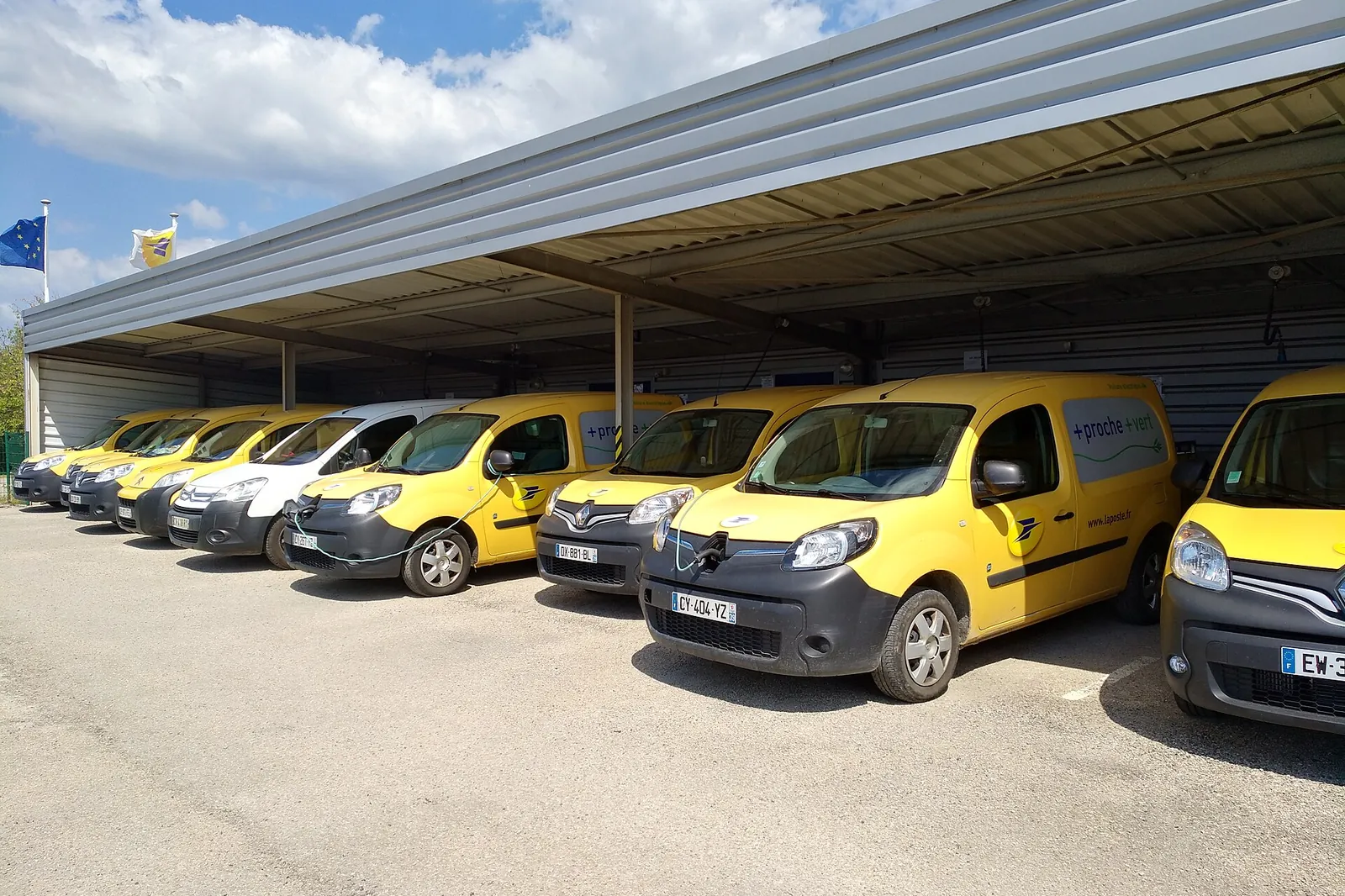
Excluded from the calculation are employees’ personal cars reimbursed through mileage allowances, unlike other company vehicle taxes, as well as vehicles assigned to exempt activities, including rental, taxis and private-hire vehicles, driving schools and agriculture. These personal cars remain in Bilan Carbone® scope 3, however, as business travel.
An average of 36,500 vehicle-days
Fleet size is the sum of each vehicle’s assigned days divided by 365, giving a threshold of 36,500 vehicle-days. In an example from the Official Public Finance Bulletin, 67 vehicles present all year, 25 arriving on long-term lease on 9 June, 10 bought in January and sold in March and 10 rented for 36 days in summer form a fleet of 83.99 vehicles, below the threshold.
The threshold is assessed per legal entity, never at group level, even with tax consolidation or a VAT group: 5 subsidiaries with 60 vehicles each are therefore not liable, whereas a single company with 120 vehicles is. By contrast, the LOM requirement added together French subsidiaries’ vehicles.
Public fleets retain their own quotas
The State and local authorities managing more than 20 vehicles of no more than 3.5 tonnes, like other public buyers, come under Environmental Code purchasing quotas, applied to their vehicle contracts and certain transport contracts: 70% low-emission vehicles from 2027 for the State, 40% until 2029 then 70% in 2030 for local authorities, including 37.4% electric or hydrogen vehicles since 2026. A service provider encounters them in specifications alongside the mandatory environmental criterion.
3Low-emission vehicles: no more than 50 g/km, and bonuses for commercial vehicles
The law defines 3 nested categories of "clean" vehicles, and some count more than once towards the target.
Electric, hydrogen and certain plug-in hybrids
A low-emission light vehicle meets 2 cumulative conditions set by Article L. 224-6-2 of the Environmental Code: CO2 emissions no higher than 50 g/km in the WLTP cycle, and particulate and nitrogen oxide emissions no higher than 80% of the strictest Euro limits, read from the certificate of conformity. 100% electric or hydrogen cars and commercial vehicles are included.
A plug-in hybrid can count if it meets the 2 thresholds, checked model by model using the certificate of conformity, rather than the sales brochure. Above 50 g/km, whatever its energy source, the vehicle is considered high-emitting and contributes to the renewal rate.
Bonuses for electric commercial vehicles and eco-scored cars
For target calculations, Article L. 421-132-5 of the CIBS increases certain vehicles’ presence duration, effectively counting them several times:
- An eco-scored electric car counts as 1.5: it achieves the environmental score required for the ecological bonus and appears on ADEME’s list.
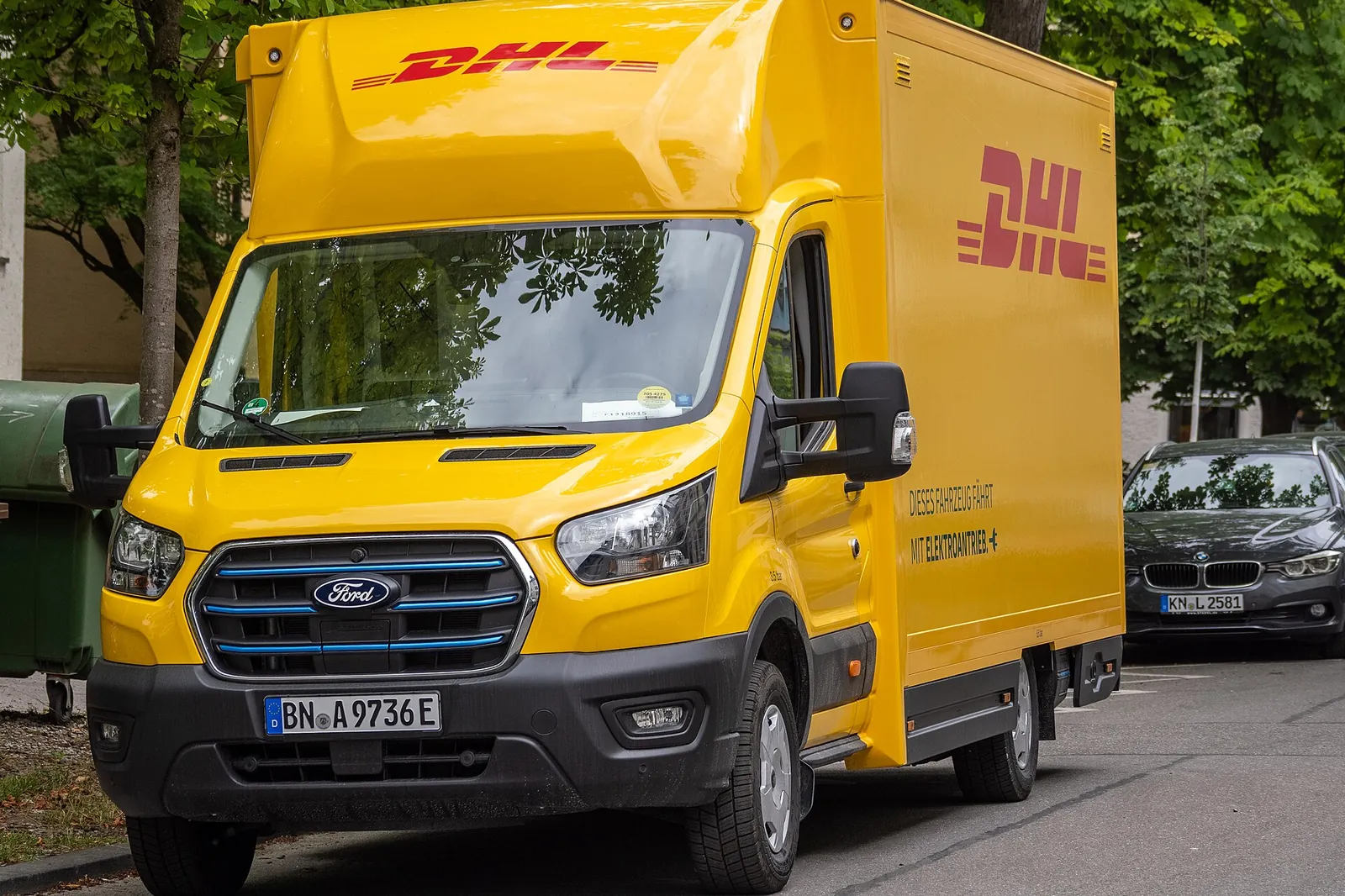
- A low-emission light commercial vehicle counts as 2, as does a low-emission special-purpose car, for example wheelchair-accessible.
- An electric, eco-scored special-purpose car counts as 2.5, the largest uplift provided by the Code.
- Other low-emission vehicles count as 1: electric cars without a score and plug-in hybrid cars meeting the 2 thresholds.
The environmental score is based on the manufacturing carbon footprint, which mainly depends on the battery and where it is produced, and a car obtaining it during the year is deemed to have held it all year. Electrifying a commercial vehicle advances towards the target 2 times faster than replacing a car with an electric car without a score.
How each vehicle counts in the tax calculation
All these vehicles count towards the threshold of 100. Only low-emission vehicles count towards the target, some several times.
Outside the fleet: employees’ personal cars reimbursed through mileage allowances, taxis and private-hire vehicles, driving schools, vehicles assigned to rental, loaned during repairs or assigned to agricultural activity, off-road vehicles, vehicles in French overseas departments.
4How the tax is calculated: a tariff, a shortfall and a renewal rate
The tax amount is the product of 3 factors. The third, often omitted, explains the difference between announced amounts and amounts due.
The target covers vehicles added in the past 4 years
The target covers vehicles added to the fleet since 1 January of the third preceding year, meaning since 1 January 2023 for the 2026 tax. The size of this recent fleet is multiplied by the year’s rate, then the number of low-emission vehicles, including bonuses, is subtracted to obtain the target shortfall, expressed in vehicles. If it is zero or negative, the tax is zero.
The tariff multiplied by the shortfall, then by the renewal rate
The shortfall is multiplied by the year’s tariff and the annual renewal rate with high-emitting vehicles: the number of vehicles added in the year that are not low-emission, divided by total fleet size. A vehicle purchased or leased for at least one year counts as 1 in its arrival year, even if it arrives on 31 December; a vehicle rented for less than a year counts in proportion to its days.
In the DGFiP example, a company with 283 vehicles had a shortfall of 6.04 vehicles and a renewal rate of 0.25 in 2025: €2,000 × 6.04 × 0.25 = €3,020 in tax, whereas a reading based on missing vehicles would have given €12,080.
The incentive tax tariff is multiplied by the share of the fleet renewed during the year with high-emitting vehicles: 0.225 for a fleet replaced every 4 years with 10% low-emission purchases.
No combustion vehicle purchase during the year, no tax
As a consequence of the formula, a company adding no high-emitting vehicle during the year pays nothing, whatever its shortfall; DGFiP emphasises this for a company renewing no vehicles. Delaying renewals reduces the year’s tax, but shifts purchases to years with higher rates and tariffs. Conversely, low-emission vehicles purchased in 2023 leave the calculation in 2027, requiring additions each year to meet the target.
5A fleet of 300 vehicles: €21,600 tax in 2026, €128,250 in 2030
Take a company with 300 vehicles renewed every 4 years: 75 vehicles enter its fleet each year, including 10% low-emission vehicles since 2023, without bonuses.
Simulate your fleet’s tax from 2026 to 2030
Adjust your fleet: the strip shows each year’s tax, and the calculation details apply to the selected year.
Recent fleet: 300 vehicles added since 2023. In steady state, the tax 2026 becomes zero from 18% low-emission purchases.
2026-2030 total: €352,350
Assumptions: stable fleet, regular renewal, the same share of low-emission purchases every year since 2023, vehicles purchased or rented for at least one year. The official calculation is made vehicle by vehicle, to the nearest day.
Without changing purchasing policy, €352,350 over 5 years
Its recent fleet has 300 vehicles, including 30 low-emission vehicles. In 2026, the target is 54 vehicles, the shortfall 24 and the renewal rate 0.225, giving an average of 67.5 high-emitting vehicles out of 300: the tax reaches €21,600, or €900 per missing vehicle. With a €5,000 tariff and a target rising every year, it reaches €50,625 in 2027, €67,500 in 2028, €84,375 in 2029 and €128,250 in 2030, giving €352,350 over 5 years if nothing changes.
The catch-up imposed by the 4-year window
To pay nothing in 2026, it would have needed 42% low-emission vehicles among its purchases that year, around 32 out of 75, because purchases from 2023 to 2025 remain in the calculation. The type of vehicles matters as much as their number: had its 10% low-emission purchases been eco-scored electric cars, the 2026 tax would fall to €8,100; with electric commercial vehicles, it would be zero in 2026 and reach €16,875 in 2027.
In steady state, the tax becomes zero when the share of low-emission purchases, including bonuses, equals the year’s rate: in 2030, 48% electric cars, 32% eco-scored cars or 24% electric commercial vehicles.
6Prepare the 2026 tax before December, declare it in January 2027
The 2026 tax is determined by the year’s final deliveries and declared in January 2027 on VAT forms alongside other vehicle taxes.
Where to start before year-end deliveries
The useful data are scattered between the lessor, fleet manager and accounts department: work begins with an inventory well before the declaration.
- List vehicles by legal entity, with arrival dates since 1 January 2023, lease contracts and exempt-use periods.
- Classify every vehicle: certificate-of-conformity emissions and pollutants, energy source, environmental score, category.
- Estimate the 2026 tax before the final deliveries: a high-emitting vehicle delivered in December counts as a whole unit.
- Build the 2027-2030 renewal plan with lessors, starting with commercial vehicles and the vehicles driven most.
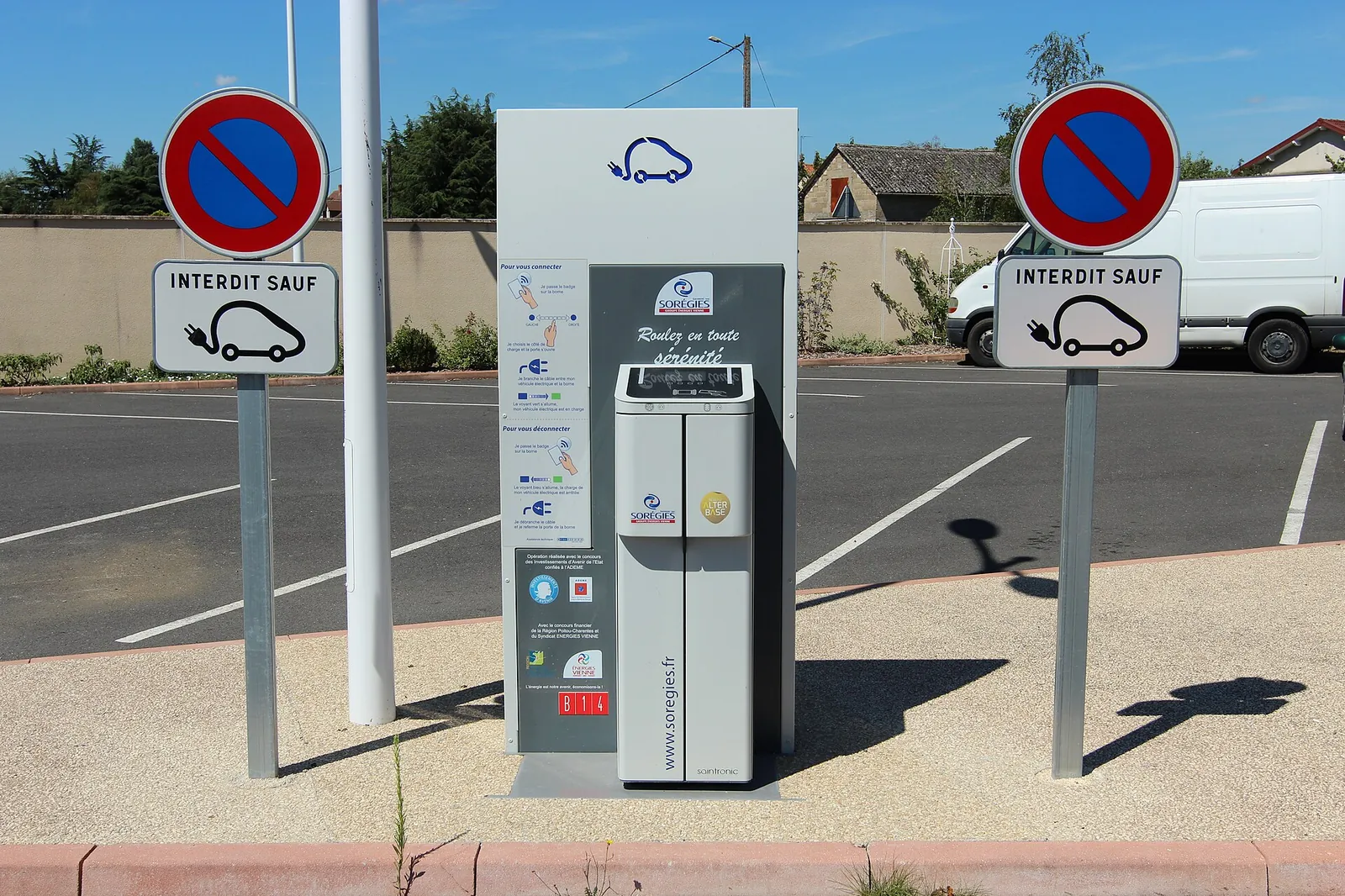
- Size charging provision at sites and employees’ homes, on which actual electric use depends, including plug-in hybrids.
Reducing the need for vehicles works on 2 fronts, with a smaller fleet, sometimes below the threshold, and fewer litres consumed. Trains for business travel and employer mobility solutions contribute.
On appendix 3310 A or CA12
Under the normal actual-assessment regime, the 2026 tax is declared on appendix No. 3310 A, line 119 in its 2026 version, attached to the VAT return filed in January 2027. Under the simplified regime, it appears on the annual CA12 return (line 70D in 2026), filed for the financial year in which the tax becomes payable. Besides the amount rounded to the nearest euro, the return states the size of the recent fleet and low-emission fleet, the number of vehicles added during the year and short-term rental days. DGFiP calculation sheet No. 2854-FC-SD works through the calculation vehicle by vehicle.
An annual summary to maintain vehicle by vehicle
Every company maintains an annual summary of vehicles within the tax’s scope, supplied to the administration on its first request: date added to the fleet, assignment periods, exempt-use periods and environmental classification details. Keeping it updated throughout the year avoids reconstructing each contract’s dates in January.
7The fleet’s contribution to Bilan Carbone® and its exposure to ETS2
Beyond the tax, the fleet contributes to company emissions and, from 2028, to the price of its fuel, through the European carbon market for fuels.
3.4 tCO2e per year for a diesel car
A diesel car travelling 20,000 km per year at 5.5 litres per 100 km consumes 1,100 litres of diesel, giving 3.4 tCO2e per year using ADEME’s Base Empreinte factor, including fuel production. In electric mode, the same distance represents 3,400 kWh and around 0.18 tCO2e with France’s 2024 mix. For 300 diesel cars, this gives more than 1,000 tCO2e per year, to compare with orders of magnitude for a company footprint. Every Bilan Carbone® calculates this volume from fuel invoices, as shown in our road haulage guide.
A diesel car and an electric car over one year of service
20,000 km per year, at 5.5 litres per 100 km for diesel and 17 kWh per 100 km for electric. Use-phase emissions, excluding manufacturing.
Over the complete life cycle, including battery manufacturing, an electric car registered in the Union in 2025 emits 73% less than a petrol car, according to the ICCT. ETS2 does not cover electricity.
The ICCT quantifies the difference over the entire life cycle, including the battery: 73% lower emissions for an electric car registered in the Union in 2025 compared with a petrol car, as detailed in our electric car analysis. For a company subject to a regulatory emissions inventory or the CSRD, this source appears in scope 1.
At €45 per tonne, ETS2 will add around 11 cents per litre of diesel
From 1 January 2028, the second European carbon market will charge suppliers for CO2 from road fuels, which they will pass on at the pump: around 11.1 cents per litre of B7 diesel at €45 per tonne. For the example car, this represents an extra €122 per year; for the 270 combustion vehicles in our typical fleet, assumed to be diesel and driven like this car, around €33,000 per year, on top of the €67,500 incentive tax in 2028.
At Projet Celsius, we manage the incentive tax and Bilan Carbone® using the same fleet file: arrival dates, energy source, mileage and litres, updated every year. Replacing the vehicles driven most first maximises emission reductions for the same number of electric vehicles, and therefore the same tax reduction. This ranking belongs in a climate transition plan.
Possible amendments in the Finance Act for 2027
Rates and tariffs are set until 2030, but each Finance Act can amend them: the 2026 Act changed the scheme, and the draft Finance Act for 2027, expected in autumn, could do so again. As of 28 September 2026, no amendment is in force. Requirements that may change after 2027 and the National Low-Carbon Strategy provide the framework for these decisions.
8Key takeaways
- Since 1 March 2025, companies with at least 100 cars and light commercial vehicles come under the annual incentive tax, which replaced the LOM Law requirement without penalties.
- The threshold is calculated in days, company by company: long- and short-term rentals included, employees’ personal cars excluded.
- The target rises from 18% in 2026 to 48% in 2030, covering vehicles added in the past 4 years; an electric commercial vehicle counts as 2 and an eco-scored car as 1.5.
- Tax equals tariff × shortfall × renewal rate: €4,000 then €5,000 per missing vehicle, weighted by the share of high-emitting vehicles added during the year.
- The 2026 tax is declared in January 2027 on appendix 3310 A under the normal actual-assessment regime, or CA12 under the simplified regime; ETS2 will make diesel more expensive from 2028.
To place fleets among other company requirements, our overview of CSR obligations lists legislation in force by size, and our guide to reducing your Bilan Carbone® places mobility among the measures. If you have not measured your emissions yet, our Bilan Carbone® support starts with the same fleet data, and its cost can be partly funded.
- Annual incentive tax: Code of Taxes on Goods and Services, Articles L. 421-94 (1° bis), L. 421-99-1 to L. 421-99-9, L. 421-132-1 to L. 421-132-3 (tariffs), L. 421-132-4 (2025-2030 rates), L. 421-132-5 and L. 421-132-6, L. 421-163 and L. 421-164; Law No. 2025-127 of 14 February 2025, Finance Act for 2025, Article 28; Law No. 2026-103 of 19 February 2026, Finance Act for 2026, Article 58, in force on 1 March 2026; CIBS, Articles D. 421-0 and D. 421-49-1 (Decree No. 2025-749 of 1 August 2025). Legislation consolidated as of 1 September 2026.
- Administrative guidance: BOI-AIS-MOB-10-30-40-20260225, annual incentive tax, published on 25 February 2026 (public consultation until 31 March 2026, enforceable from publication); BOI-AIS-MOB-10-10, § 165 to 168, definitions of low-emission and low-carbon-footprint vehicles.
- Previous requirement: Law No. 2019-1428 of 24 December 2019, Mobility Framework Law, Articles 77 (Article L. 224-10 of the Environmental Code: 10% to 50% of renewals, without penalties) and 79 (publication of rates); Law No. 2021-1104 of 22 August 2021 (Climate and Resilience), Article 113 (rates increased to 40% in 2027 and 70% in 2030); Law No. 2025-127 of 14 February 2025, Article 28, III (Article L. 224-10 restricted to mopeds and light motorcycles).
- Definitions and other requirements: Environmental Code, Articles L. 224-6-1 to L. 224-6-2, L. 224-6-4 and L. 224-6-5 (low- and very-low-emission vehicles, low carbon footprint), D. 224-15-12 E to G; L. 224-7 and L. 224-8 (public buyers); L. 224-9-1 and L. 224-10 (companies; mopeds and light motorcycles); D. 224-15-13 (publication of renewals). ADEME, list of vehicles eligible for the environmental score.
- Declaration: DGFiP, guidance No. 2854-FC-NOT-SD (December 2025) and calculation sheet No. 2854-FC-SD; appendix No. 3310 A, line 119, and guidance for return No. 3517, line 70D (2026 forms); CIBS, Article A. 421-46-1.
- Emissions and ETS2: ADEME, Base Empreinte: B7 road diesel, 3.10 kgCO2e per litre; electricity, average 2024 mix, consumption, 0.0519 kgCO2e per kWh. ICCT, Life-cycle greenhouse gas emissions from passenger cars in the European Union: A 2025 update and key factors to consider, 8 July 2025. Regulation (EU) 2026/667, Article 2 (ETS2 postponed to 2028); DGEC default factors: 2.47 kg of CO2 per litre of B7 diesel. Consumption assumptions and fleet simulation: Projet Celsius calculations.