
- 1The Tertiary Decree requires -40% energy use in 2030 from 1,000 m² of tertiary space.
- 2The lease allocates reporting and works between owner and tenant, both subject to the rules.
- 3Automatic control required by the BACS Decree is the responsibility of the equipment owner.
- 4Report before 30 September 2026; baseline and target adjustments remain open until 2027.
By 30 September 2026, owners and tenants of tertiary buildings of 1,000 m² or more must have reported their 2025 energy consumption on OPERAT, the monitoring platform of ADEME (the French Agency for Ecological Transition). In a rented building, the file almost always encounters the same question: who must do it? Both parties are subject to the rules, and the lease allocates the work, with each party reporting and acting on what falls within its responsibility. For the BACS Decree, which requires a heating and air-conditioning control system, the obligation falls on the equipment owner, who is not always the building owner.
Owner or tenant: who bears each obligation
The legislation refers to the lease for most obligations, except on 2 points: major repairs remain the landlord’s duty, and building management falls on the equipment owner.
The Tertiary Decree sets an outcome, -40% final energy consumption in 2030, and the building management required by the BACS Decree is one tool for achieving it. This guide allocates their duties between landlord and tenant, calculates an office building’s 2030 target using official values and corrects an often misquoted timetable: the baseline year and target adjustments remain open until September 2027.
1What do the Tertiary Decree and BACS Decree require?
The 2 decrees appear in the Construction Code and largely target the same buildings. The Tertiary Decree is by far the more demanding, since it tracks an outcome measured through bills every year.
The Tertiary Decree: an obligation to achieve a result
Decree No. 2019-771 of 23 July 2019, implementing the ELAN law and codified in Articles R. 174-22 onwards of the Construction Code, requires final energy consumption in tertiary buildings to fall by 40% in 2030, 50% in 2040 and 60% in 2050. Each building chooses between 2 targets: reducing consumption by these proportions compared with a baseline year, or falling below a kWh per m² ceiling set for its activity, the absolute value. Actions must remain consistent with the national low-carbon strategy.
Monitoring takes place through OPERAT, the tertiary energy performance observatory managed by ADEME. Every year, by 30 September at the latest, the party covered reports the previous year’s consumption for each energy source; the platform adjusts it for the climate and issues an annual certificate, graded from a grey leaf for rising consumption to 3 green leaves when the absolute value is reached. New buildings are included too, with their first full operating year as their baseline, alongside RE2020 and its 2028 threshold.
The BACS Decree: an equipment requirement
The BACS Decree, for Building Automation and Control Systems, requires a building automation and control system, which operators call GTB (gestion technique du bâtiment), or building management. Under the Construction Code, this system must:
- Continuously measure equipment consumption by zone and hour, retaining monthly records for 5 years.
- Benchmark performance against reference values and alert the operator to efficiency losses.
- Communicate with other technical equipment in the building, regardless of manufacturer.
- Allow manual shutdown and autonomous management of each system.
Periodic checks and an inspection every 5 years are also required, with the first inspection due by 1 January 2025 for systems already installed. According to the ministry’s FAQ, based on NF EN ISO 52120-1, class C is sufficient for control functions, provided that setpoint management achieves class B and operating-time management and consumption reporting achieve class A.
The DPE: an information document
The energy performance assessment (diagnostic de performance énergétique, DPE), attached to the lease when signed, describes premises at a given point in time, with purely informative recommendations and no reduction target. The mandatory energy audit, which targets businesses according to energy consumption, follows a third logic, that of site assessment.
2Who is covered: 1,000 m² of tertiary space, 70 kW of capacity
The 2 thresholds are measured differently: the Tertiary Decree counts square metres of activity, while the BACS Decree adds up kilowatts of heating or air-conditioning capacity.
The 1,000 m² threshold is assessed at site level
Owners and, where applicable, tenants of any building, part of a building or group of buildings on the same landholding hosting tertiary activities over at least 1,000 m² of cumulative floor area are covered. A mixed-use building with 3 floors of 400 m² rented to 3 companies is therefore covered, as is a campus of small buildings. Tertiary use is understood broadly: offices, shops, universities, hospitals, hotels, warehouses, server rooms and even offices on an industrial site.
A site that falls below 1,000 m² after an activity leaves remains subject to the rules for the occupants who stay. Only 3 categories are exempt: buildings under temporary planning permission, places of worship and operational buildings for defence, civil protection or internal security.
The BACS threshold is measured in kilowatts
The BACS Decree targets tertiary buildings whose heating or air conditioning, including ventilation, exceeds 70 kW of useful rated output, regardless of floor area. The ministry’s FAQ explains the method: add all heat generators, or all cooling generators, in the same building, even on different networks, so 3 boilers of 25 kW give 75 kW; heating and cooling are not added together, and a central plant shared by several buildings counts in full for each; exclude standby equipment and mobile appliances; for a district heating connection, use the heat exchange station’s capacity.
Above 290 kW, existing buildings had to be equipped by 1 January 2025. Between 70 and 290 kW, the deadline originally set for 2027 was postponed to 1 January 2030 by Decree No. 2025-1343 of 26 December 2025, with the requirement applying earlier if the system is replaced before then. New buildings are covered from construction. A study demonstrating a payback period of more than 10 years, after subsidies, exempts the building from installation.
Your building and the BACS Decree: the deadline according to capacity
Answer for the tertiary part of the building. Capacity appears on generator nameplates: add all generators in the same building, excluding standby and mobile equipment.
Heating or air-conditioning capacity
The higher of the 2, including ventilation.
Planning application submitted
A study demonstrates payback over 10 years
Deadline
By 1 January 2030 at the latest
Or on system replacement, if earlier
Deadline postponed from 2027 to 2030 by the decree of 26 December 2025. Systems above 70 kW are connected, and other equipment if connection is cost-effective in less than 10 years.
3Who owes what, landlord or tenant?
The Construction Code does not allocate roles on the parties’ behalf: it refers to the contract. Owners and tenants are subject to the obligation for actions falling within their respective responsibilities under the contractual provisions, jointly define the actions and each fund their share, so a silent lease leaves the 2 parties exposed.
OPERAT reporting
Annual reporting is carried out by the owner or tenant, according to the lease, and may be outsourced to a service provider; the tenant may also delegate it to the owner, a practical solution in multi-occupancy buildings. The 2 parties exchange actual consumption data for equipment they operate every year, and each occupant of a shared building reports its floor area plus its share of common areas, according to the service charge allocation.
Works and their funding
In practice, actions follow each party’s control: the landlord acts on the envelope, common equipment and major repairs, the tenant on equipment it has installed, lighting in its premises and its usage. The Commercial Code sets a clear limit: compliance works that qualify as major repairs cannot be recharged to a tenant under a commercial lease, and the landlord provides a forecast schedule of works every 3 years.
Above 2,000 m² of offices or shops, the lease must also include an environmental annex: each party describes its equipment and consumption, then the 2 establish a periodic review and joint action programme, the natural place to set out clearly who reports, who pays and who manages.
BACS follows equipment ownership
For the BACS Decree, the rule is simpler and sometimes counterintuitive: the obligation falls on the owner of the heating or air-conditioning systems. A tenant that has installed its own air conditioning is therefore responsible; when several equipment owners occupy the same building, their capacities are added to assess coverage, and each connects its equipment to a common system or to systems that communicate. Any air-conditioning replacement before 2030 also intersects with the 2027 F-gas prohibitions.
Since 1 July 2026, the issue has extended beyond the landlord-tenant relationship: the OPERAT certificate is displayed in the building, or published by another accessible means, and the compliance assessment is attached for information to the preliminary sale agreement and lease. The Ministerial Order of 1 August 2025 set this date as the end of the period during which these 2 formalities remained optional.
4Relative or absolute value: which target should you aim for in 2030?
The legislation allows a choice, since reaching either of the 2 targets is enough: the first task is to determine which is less demanding for your building.
The relative value: -40% compared with a baseline year
The relative target starts from baseline consumption, that of a full year chosen between 2010 and 2022 and adjusted for the climate: the 2030 target is 60% of it, then 50% in 2040 and 40% in 2050. A high-consumption year makes the target easier to reach, and the amended Ministerial Order of 10 April 2020 allows this choice to be reported before 30 September 2027; otherwise, the baseline becomes the first full year reported on OPERAT, often more efficient than the 2010s.
The absolute value: an activity-specific ceiling
The absolute target is a ceiling in kWh of final energy per m² per year. It combines a climate component (heating, ventilation, air conditioning), set by climate zone and altitude, and a usage component (lighting, hot water, IT), set by activity and adjustable for opening hours and occupancy. Since the Ministerial Order of 1 August 2025, all activities have their 2030 value; the 2040 and 2050 values have not yet been published.
For offices below 400 m altitude, the official tables set 2030 values from 90 to 116 kWh/m²/year for cellular offices, depending on the zone (40 to 66 for the climate, 50 for usage), 10 more for open-plan offices and 20 more for flexible offices.
An office building’s 2030 target: relative or absolute value
Reaching either of the 2 targets is enough: the selected target is the less demanding. Adjust climate-corrected baseline consumption.
Example: 5,000 m² of offices in Paris
A Paris office building with 5,000 m² of open-plan space and a baseline of 180 kWh/m²/year has a relative target of 108 kWh/m²/year and an absolute value of 117 (57 for the climate, 60 for usage): the latter applies, and the required reduction is -35%, or around 315 MWh per year. For cellular offices, the absolute value falls to 107 and the 2 targets intersect at a baseline of around 178 kWh/m²/year: above it, the relative route is easier; below it, the absolute value is easier.
The 2010 averages cited in the ministry’s methodology sheet vary by a factor of two depending on the source: around 150 kWh/m²/year for offices according to the Sustainable Real Estate Observatory, around 292 according to ADEME. At 150, Paris cellular offices need to reduce consumption by only around 29% thanks to the absolute value; at 292, the relative route becomes easier, with a target of 175 kWh/m²/year.
5Adjusting your target: 3 grounds, 1 technical file
When neither of the 2 targets can be reached at reasonable cost, the code provides 3 grounds for adjustment, 2 of which require a technical file prepared under the responsibility of the owner and, where applicable, the tenant.
Technical, architectural or heritage constraints
An action may be excluded if it threatens the building, conflicts with rules for a historic monument, a designated heritage site or a labelled building, or encounters an easement. The file rests on a technical note prepared by an architect, an engineering consultancy or an internal lead, or a detailed architect’s opinion for protected buildings.
Manifestly disproportionate costs
The cost of an action is considered disproportionate when its simple payback period, after subsidies, exceeds 30 years for the envelope, 15 years for equipment replacement and 10 years for controls and operation. Each measure is calculated separately, ruling out a blanket claim of disproportionate costs: a building may adjust its insulation target while still being required to install cost-effective building management, with the same 10-year threshold as the BACS Decree.
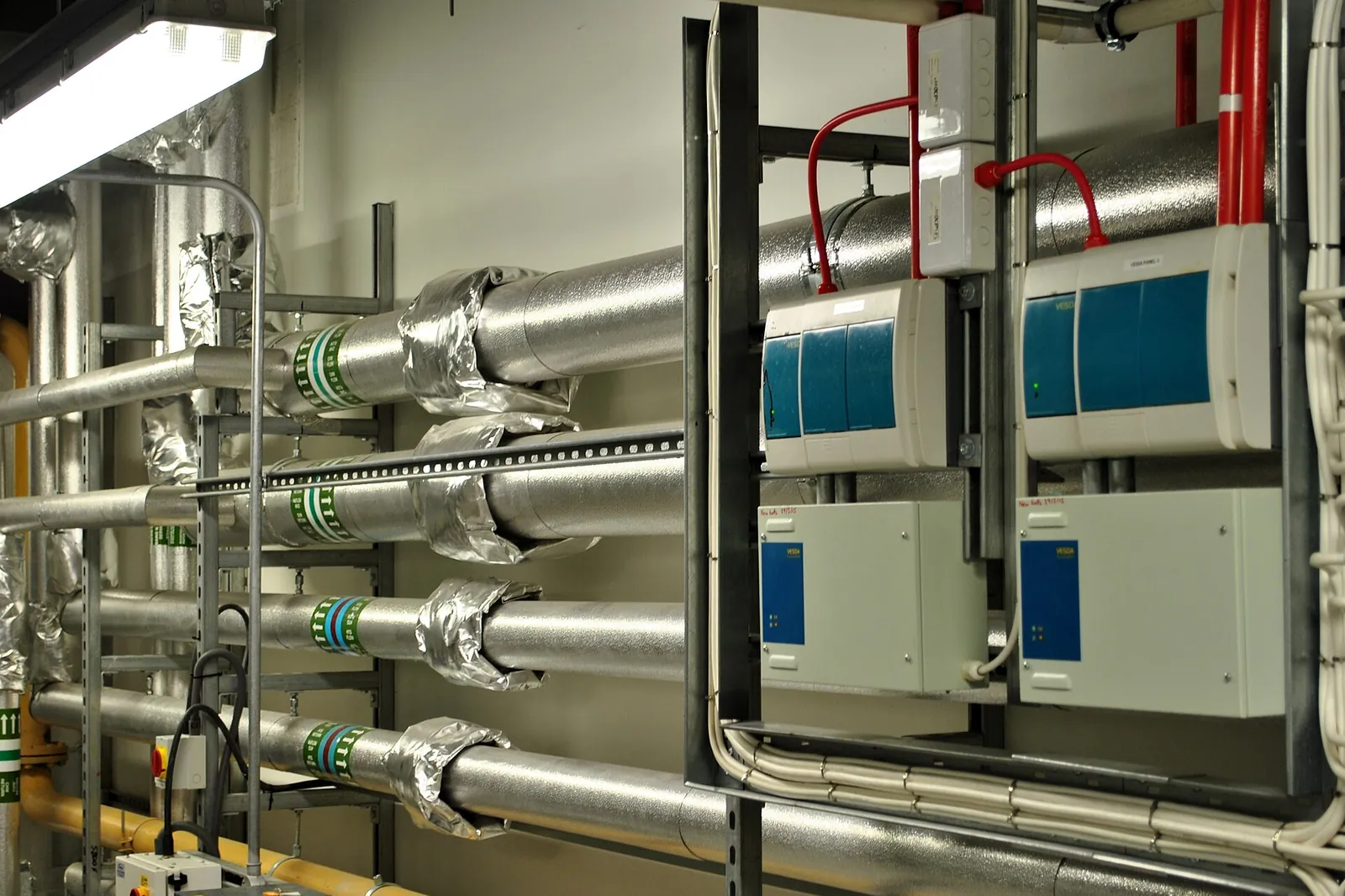
For the 2030 target, adjustment for disproportionate costs must be reported by 30 September 2027 at the latest: the ministerial order sets the limit at 5 years after the decade’s first reporting deadline, 30 September 2022. The 30 September 2026 date repeated by several online guides does not appear in the legislation currently in force. The file can then be updated at any time, but the authorities may require it within 15 days following a statistical deviation, too short a deadline to produce an energy study.
Activity levels: taken into account without a file
Increased opening hours or occupancy adjust the target automatically: OPERAT recalculates it from the reported usage-intensity indicators, which constitute a declaration on honour.
6What is the risk of not reporting by 30 September?
Missing the deadline triggers no automatic fine: the prefect conducts a procedure distinguishing failure to report from failure to meet the target.
A missing report leads to publication
Without submission on OPERAT, the prefect may issue formal notice requiring the party covered to comply within 3 months, then publish the unheeded notice on a State website, the mechanism practitioners call name and shame, without a fine at this stage.
A missed target can cost up to €7,500
A target missed without justification triggers a longer procedure: formal notice to establish a joint action programme for owner and tenant, with a timetable and funding plan, then individual notices and publication, and finally a €1,500 fine for an individual and €7,500 for a legal person. An approved programme that is not implemented leads to a published finding of failure, with the same ceilings. The 2030 targets will be checked by 31 December 2031 at the latest.
Tertiary Decree and BACS Decree: deadlines up to 2031
The Tertiary Decree follows an annual cycle; the BACS Decree progresses by capacity thresholds and covers new buildings from their planning application.
Property market risk: visible since 1 July 2026
For an owner, the most likely consequence is commercial, since a building missing from OPERAT or poorly graded now stands out in a sale or letting. According to the results published by the ministry and ADEME on 19 May 2026, OPERAT covers only 50 to 60% of properties subject to the rules, with nearly 340,000 entities reported.
Across reported properties, climate-adjusted final energy consumption fell by 26% between the 2010-2019 period and 2024, and nearly half of buildings already meet the target set for 2030.
7Where to start, before and after 30 September
For a party covered that has not yet reported anything, the urgent task is to report 2025 consumption; the rest can be organised with the other party to the lease by September 2027:
- Create or recover your OPERAT account and report each entity covered, with its floor areas and activities.
- Enter 2025 consumption for each energy source, supported by bills, or delegate submission to a service provider or network operator.
- Allocate roles with the other party, ideally in the environmental annex or a lease amendment.
- Choose the most favourable baseline year between 2010 and 2022, before 30 September 2027.
- Inventory heating and air-conditioning capacities to assess the building against the BACS Decree.
- Build the action plan: settings and controls first, equipment next, envelope last, documenting payback periods.
These data serve purposes beyond the decree: consumption reported on OPERAT feeds scopes 1 and 2 of a Bilan Carbone® (the French carbon accounting method) or a mandatory greenhouse gas emissions report (BEGES), and the 2030 pathway belongs in a climate transition plan. Switching from gas to electricity, already under way across reported properties, also reduces exposure to the future carbon price on heating; the code only prohibits an energy switch from increasing greenhouse gas emissions.
At Projet Celsius, we consider the most costly mistake to be treating the Tertiary Decree as an annual formality: reporting takes a few hours, but the choice of baseline year and allocation of roles in the lease determine the effort required until 2050. The technical measures are known, from adjusting air-conditioning setpoints to alternatives to mechanical cooling; the method for reducing a footprint helps prioritise them, and several public funding schemes fund the assessment and climate strategy that precede them.
8Key takeaways
- The Tertiary Decree targets -40% final energy consumption in 2030, then -50% in 2040 and -60% in 2050, for any site with 1,000 m² or more of tertiary activity.
- Owner and tenant are both subject to the rules: the lease allocates reporting and works, and compliance works qualifying as major repairs cannot be recharged to a commercial lease tenant.
- The BACS Decree falls on the system owner: above 290 kW since 1 January 2025, above 70 kW by 1 January 2030 or on replacement.
- 2025 consumption must be reported before 30 September 2026; the baseline year and adjustment for disproportionate costs before 30 September 2027.
- Failure to report leads to formal notice and then publication; missing the target leads to an imposed action programme and, on failure to comply, a fine of up to €7,500 for a company, with the certificate visible since 1 July 2026.
To place these obligations among a company’s wider regulatory constraints, our overview of mandatory CSR by company size sets them alongside BEGES and the CSRD, and our energy audit or Bilan Carbone® comparison helps choose the right assessment for building an action plan.
- Tertiary Decree: Construction and Housing Code, Articles L. 174-1, R. 174-22 to R. 174-32 and R. 185-2 (codified Decree No. 2019-771 of 23 July 2019); ministry presentation of the Éco Énergie Tertiaire scheme, updated on 19 March 2026.
- Method, deadlines and adjustments: Ministerial Order of 10 April 2020 on obligations to reduce final energy consumption in tertiary buildings, Articles 3 (baseline year), 6 (adjustment deadline), 9 and 11 (grounds and payback periods) and 13 (annual 30 September deadline); Ministerial Order of 1 August 2025, Official Journal of 6 September 2025 (end of optional period on 1 July 2026); Ministerial Order of 11 August 2026, Official Journal of 19 August 2026 (correction of adjustment formulae for 7 subcategories, with no effect on offices or deadlines). The Légifrance pages are in French.
- Absolute values: 2030 absolute values by category, Ministry for Cities and Housing, "Offices - Public services - Banks" table and associated assumptions sheet (2010 averages from OID and ADEME), page updated on 22 September 2026.
- BACS Decree: Construction and Housing Code, Articles L. 174-3 and R. 175-1 to R. 175-5-1, amended by Decree No. 2023-259 of 7 April 2023 and Decree No. 2025-1343 of 26 December 2025; ministry timetable update; ministry BACS FAQ, questions 05, 07, 08 (updated on 4 September 2026), 11, 12, 18, 20 and 30; ministerial answer to written question No. 3737, Official Journal of 20 June 2023 (original 2027 deadline).
- Lease: Environmental Code, Article L. 125-9 (environmental annex) and Construction Code, Articles D. 174-19 to D. 174-21 (content); Commercial Code, Articles L. 145-40-2 and R. 145-35 (charges and works that cannot be charged to the tenant); Construction Code, Article L. 126-29 (DPE attached to the lease).
- Results: Ministry and ADEME press release of 19 May 2026: OPERAT reporting results as of 31 January 2026.