
- 1Refrigerant-based air conditioning comes last in the recommended hierarchy. ADEME and the IPCC recommend the same sequence: passive first (insulation, solar protection), then low-energy active (fan, evaporative cooling, district cooling), refrigerant-based air conditioning last.
- 2A fan uses 10 to 15 times less than a split unit in average seasonal use. Effective up to 31-32 °C ambient temperature.
- 3An evaporative cooler works without refrigerant (zero GWP), uses little electricity, but needs a dry climate (humidity < 60%) and a water source. Relevant for south-eastern France and much of the inland commercial sector, but not for the Atlantic coast in stormy summer weather.
- 4District cooling (Fraîcheur de Paris, La Défense, Bordeaux, Marseille) is the best-performing solution in connected dense areas. Shared production, COP of 3 to 5, no outdoor unit. Incorporate it very early in a new commercial building project.
During a heatwave, the growing question is no longer "should we use air conditioning?" but "where should we start before using air conditioning?". ADEME and the IPCC recommend a precise hierarchy: passive measures first (insulation, solar protection), then low-energy active solutions (ventilation, evaporative cooling, district cooling), with refrigerant-based air conditioning as a last resort. This article details the four most relevant active alternatives, with their effectiveness thresholds and quantified carbon footprints. These solutions' effectiveness depends on the local climate: our map of heat exposure by municipality helps you locate your area before deciding.
1When and why look for an alternative to air conditioning?
A first point of terminology. The Atelier parisien d'urbanisme (Apur) usefully recalls the difference between three processes often confused: air conditioning guarantees a set temperature within ± 1 °C (laboratories, cleanrooms, industrial precision), cooling aims for a setpoint with a wider tolerance (commercial offices), and cooling without a guaranteed temperature simply makes indoor air cooler than outdoor air, without guaranteeing an absolute temperature. The low-energy alternatives described here target this category.
Energy efficiency of cooling techniques, from lowest to highest
Composite score (0 = low / 100 = excellent) reflecting equivalent SEER, stability in heatwaves and refrigerant management. Tap a row to see usage details, GWP and the cold source.
Second point: active alternatives do not replace air conditioning in every situation. They stop being effective when ambient temperature exceeds a physiological threshold (around 31 to 32 °C for a fan, higher for evaporative cooling in a dry climate). These thresholds, combined with the local electricity mix, refrigerants used and required cooling capacity, determine each solution's actual carbon footprint.
2Fans and ceiling fans
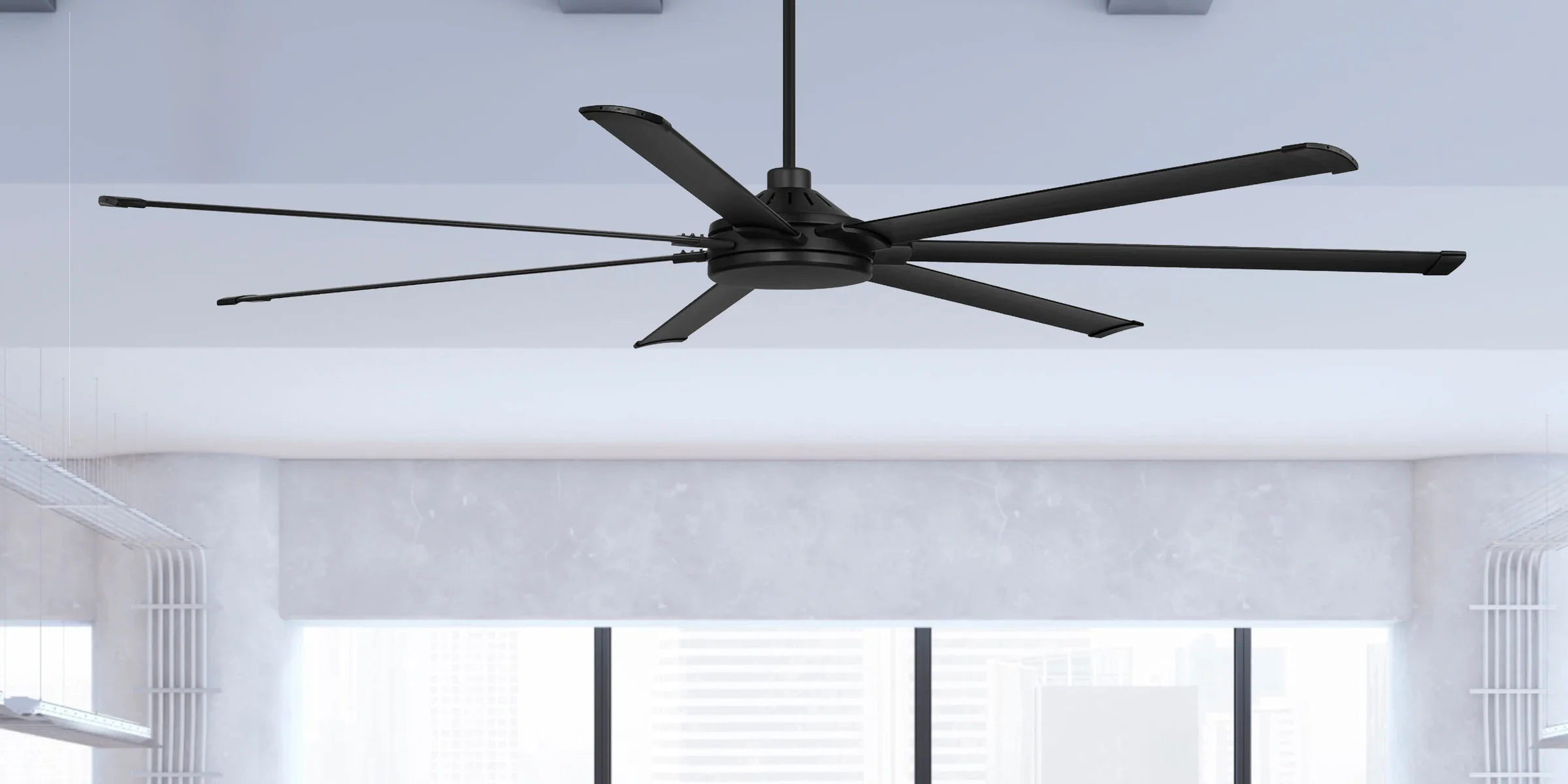
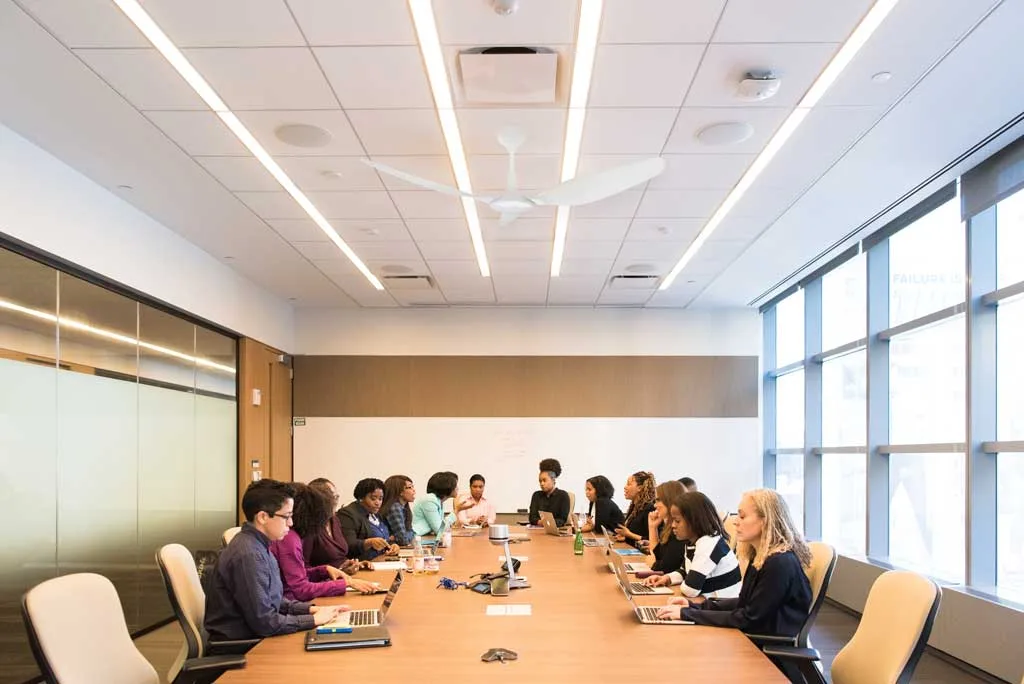
A fan or ceiling fan uses 30 to 70 watts, compared with around 500 W to 1 kW for a 2.5 to 3.5 kW split unit operating at nominal capacity. In average seasonal use, the actual difference is 10 to 15 times less electricity (a modern inverter split unit modulates its power and rarely runs at full capacity). The mechanism is different: a fan does not cool the air, but speeds up sweat evaporation on the skin, making it feel 2 to 3 °C cooler. It remains effective up to around 31 to 32 °C ambient temperature, beyond which blowing hot air becomes counterproductive. In France, the Campagna et al. (2026) study documents its underuse as a cultural blind spot, even though half the discomfort hours in a typical hot season occur below this threshold. A ceiling fan covers a whole room and can be combined with a thermostat set 2 to 3 °C higher without loss of perceived comfort.
3Evaporative cooling
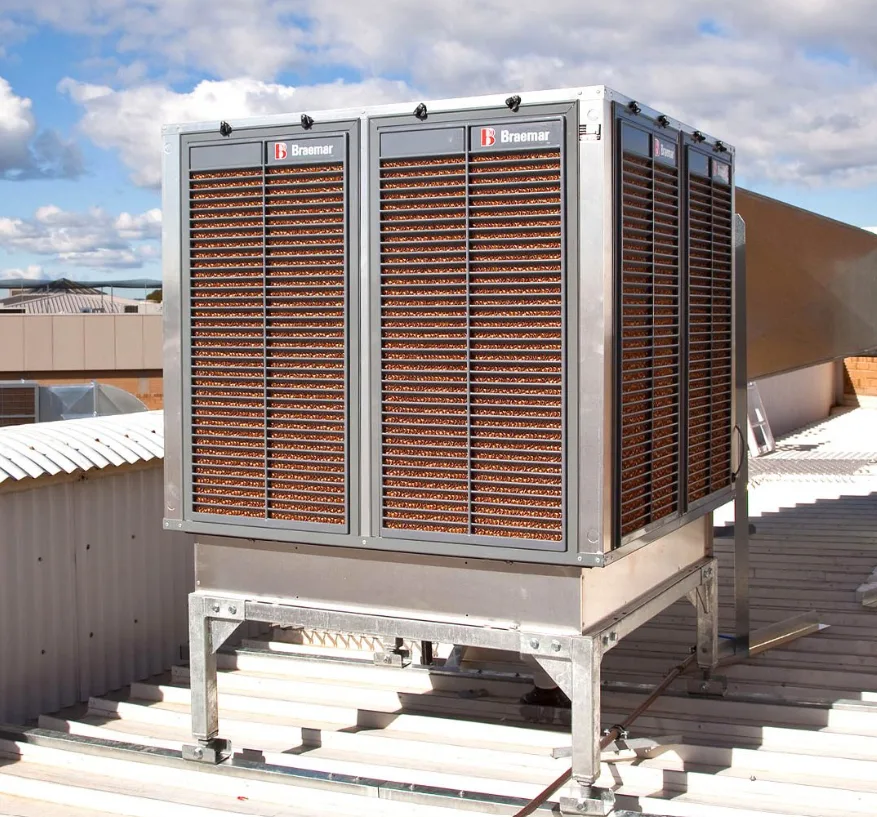
Air is cooled by water evaporating from a wet surface, without any refrigerant (zero GWP). Electricity consumption: that of a fan (50 to 120 W) plus a pump. Water consumption: 5 to 15 L/day in intensive use. Two limits: efficiency falls beyond 60% humidity (ineffective on the coast or during stormy weather), and the achievable temperature difference is capped at 5 to 8 °C below outdoor temperature (compared with 10 to 15 °C for a split unit). Enough to make the air cooler, not for cooling to a fixed setpoint. Engineering consultancy Freio (Clément Gaillard) documents several equipped commercial projects in France.
4District cooling
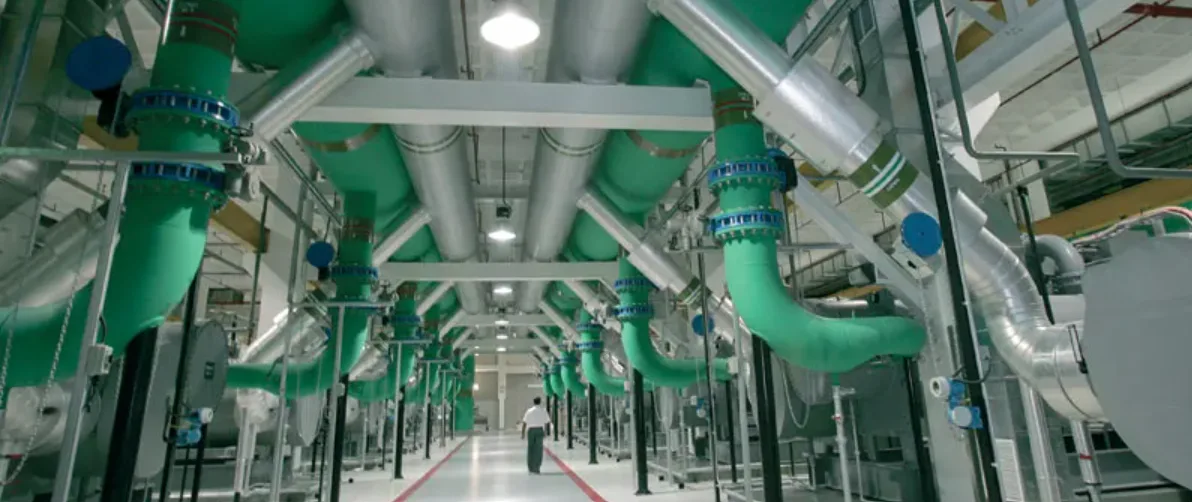
A district cooling network (DHC, District Heating and Cooling) produces cooling in a single plant and distributes it through a chilled-water network. Around ten networks exist in France, the most established being Fraîcheur de Paris (Seine water, ~800 connected sites), La Défense, Bordeaux and Marseille. Others are being developed (Lyon, Toulouse, Strasbourg, Nantes). Shared COP of 3 to 5, no outdoor unit on the façade, and a carbon footprint benefiting from scale (energy recovery, natural cold sources). Structural limit: a connection is required. For a commercial building in a covered dense area, it is almost always the best-performing solution for carbon and the urban landscape. A project criterion to incorporate very early. The connection involves the planning decisions described in our guide to adapting a territory. Around ten networks exist in France, the most established being Fraîcheur de Paris (Seine water, ~800 connected sites), La Défense, Bordeaux and Marseille. Others are being developed (Lyon, Toulouse, Strasbourg, Nantes). Shared COP of 3 to 5, no outdoor unit on the façade, and a carbon footprint benefiting from scale (energy recovery, natural cold sources). Structural limit: a connection is required. For a commercial building in a covered dense area, it is almost always the best-performing solution for carbon and the urban landscape. A project criterion to incorporate very early.
Compare your project: consumption, carbon footprint, seasonal cost
5Key takeaways
- Refrigerant-based air conditioning comes last in the recommended hierarchy. ADEME and the IPCC recommend the same sequence: passive first (insulation, solar protection), then low-energy active (fan, evaporative cooling, district cooling), refrigerant-based air conditioning last.
- A fan uses 10 to 15 times less than a split unit in average seasonal use. Effective up to 31-32 °C ambient temperature.
- An evaporative cooler works without refrigerant (zero GWP), uses little electricity, but needs a dry climate (humidity < 60%) and a water source. Relevant for south-eastern France and much of the inland commercial sector, but not for the Atlantic coast in stormy summer weather.
- District cooling (Fraîcheur de Paris, La Défense, Bordeaux, Marseille) is the best-performing solution in connected dense areas. Shared production, COP of 3 to 5, no outdoor unit. Incorporate it very early in a new commercial building project.
- Refrigerant-based air conditioning remains useful for critical uses (laboratories, cleanrooms, commercial buildings with strict setpoints). In this case, favour a reversible ground-source heat pump for new construction or major renovation (SEER 5-8+, stable performance in heatwaves).
The full LCA of an air conditioner (climate, minerals, ozone, HFC refrigerants) is detailed in our main article on air conditioning's environmental impact. To incorporate these choices into corporate reporting, see also our Bilan Carbone® scope 3 guide.