
- 1No text requires an audit, but every green message must be capable of being proven.
- 24 families of providers share the work, and none of them covers it alone.
- 3The legal opinion falls to the lawyer, the link to the evidence to the technical firm.
- 4A one-off opinion costs €0 to €520 excl. VAT, a product range audit a few thousand euros.
No text defines an audit of environmental claims. The EU directive against greenwashing, known as EmpCo, requires every green message about a product to be capable of substantiation, and requires a third party only for a label or a future commitment. 4 families of providers sell this review: lawyers, technical firms, certification bodies and tool publishers, alongside the ARPP (Autorité de régulation professionnelle de la publicité, the French advertising self-regulatory body) for advertising.
Which support should you choose to check your green claims?
Choose a stage of the review: who does it for you, and at what price level.
Each message is linked to the document that substantiates it, with a check that this document covers the right component, the right period and the right site.
Each does part of the work. The lawyer gives a legal opinion, the certifier checks a label against a standard, the tool spots words in a text, and the technical firm links the message to its supporting document before proposing the sentence that document allows you to write. The criteria for comparing 2 quotes are set out in our guide to choosing a provider.
1What should you check in your environmental claims?
The messages targeted
Directive (EU) 2024/825 of 28 February 2024 adds 12 practices to the blacklist of unfair commercial practices, which are prohibited in all circumstances. 4 of them relate directly to claims and labels:
- A sustainability label that is based neither on a certification scheme nor on a public authority, such as an in-house logo printed on packaging.
- A generic claim, such as "eco-friendly", "environmentally friendly" or "green", without recognised excellent environmental performance.
- A claim about the whole product or the whole company when it concerns only one aspect, such as a "sustainable" brand that is talking only about its packaging.
- A product presented as carbon neutral or as having a reduced climate impact on the basis of emissions offsetting.
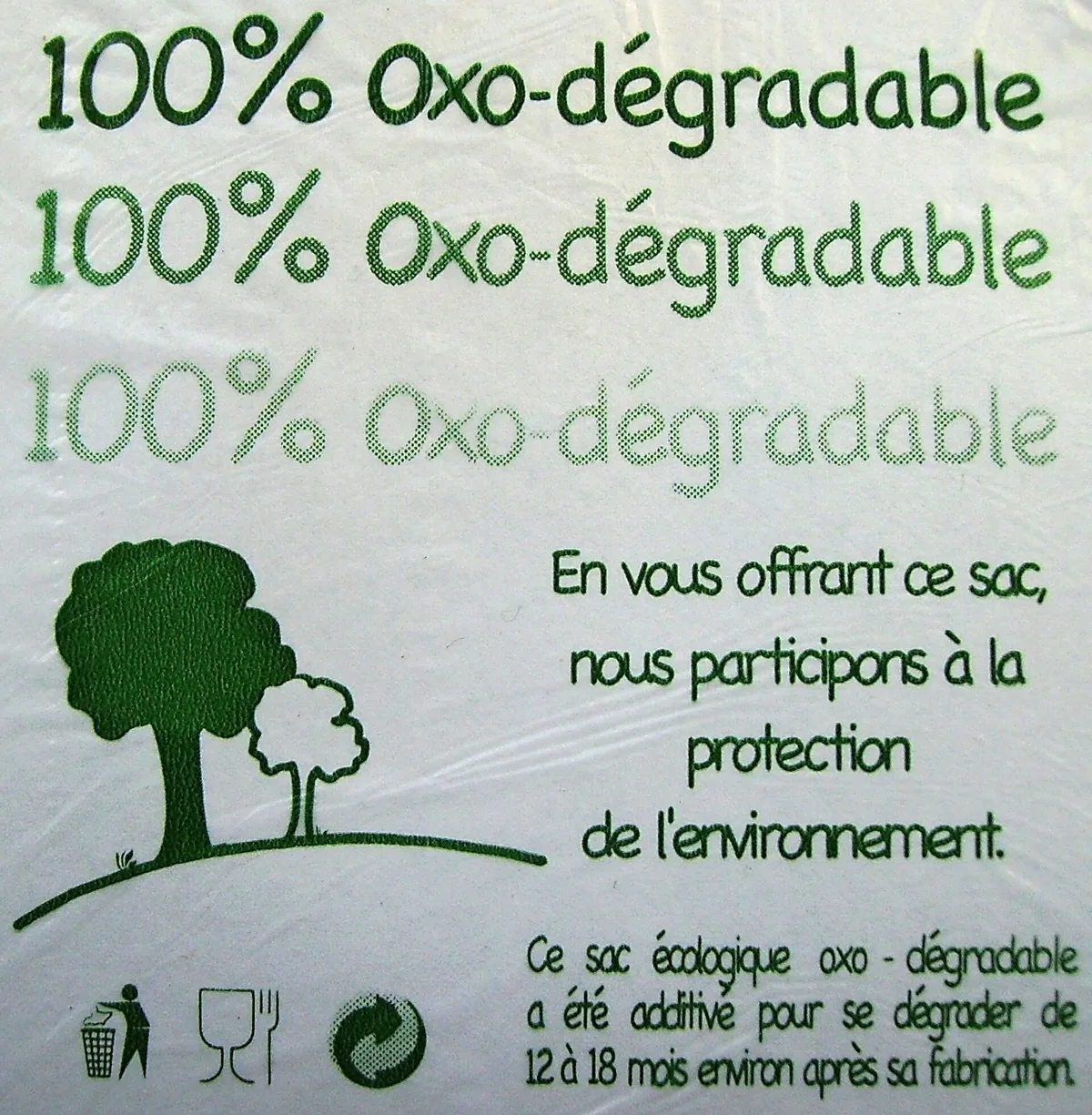
The directive also prohibits presenting what the law requires of everyone as an advantage, and it regulates messages about the durability of goods. The EmpCo blacklist covers each point with examples of wording.
Labels and future commitments
The directive requires a third party in only 2 cases. A label must be based on a certification scheme checked by a third party or be established by a public authority, which rules out an in-house label without certification. A future commitment, such as "net zero emissions by 2040", must rest on a detailed plan verified by an independent third-party expert, as explained in the article on verified climate commitments. For everything else, the company is free to choose who reviews its messages.
French law as at 12 November 2026
Member States had to transpose the directive by 27 March 2026, for application from 27 September 2026, according to the EmpCo timeline. In France, the bill adapting French law to EU law that carries it was adopted by the Senate on 18 February 2026. At the National Assembly, its file stops at referral to 4 committees for an opinion, on 23 April 2026, and the European Commission sent France a letter of formal notice on 28 May 2026.
French law already imposes penalties: the Consumer Code targets any claim that misleads, and the French Environmental Code has prohibited since 2022 writing "biodegradable" or "environmentally friendly" on a product or its packaging. A company selling in Germany, where the blacklist has applied since 27 September 2026, is already bound by the new rules, as detailed in the article on the companies affected.
2What can you check yourself?
The inventory of messages
The first task is done in-house: list every green message, medium by medium. One line per message is enough, with the medium (packaging, product sheet, website page, campaign, range name, logo), the exact wording, the document that substantiates it and what that document establishes. The marketing team knows its media better than anyone, and this list shortens the work of any provider.
Take a brand of washing-up liquid that prints "100% recycled bottle" on its label. Its supporting document is the plastic supplier's certificate, which covers the body of the bottle produced in 2025; the cap is not included. The sentence that document allows becomes "bottle body made of 100% recycled plastic", and the gap shows up in the first line of the inventory.
First-pass tools
Free tools make a first pass over texts. WisePIM highlights in a product sheet the wording targeted by EU rules, cites the rule at issue and suggests a rewording. The publisher itself states that the tool reads only the text: it sees neither logos, colours nor images, does not know the evidence and does not constitute legal advice. A pass with no alert therefore does not prove that a text complies. The 3-question method of our test helps place a sentence before submitting it to an expert.
Cases that call for an expert
4 situations call for an outside view, because they are judged on the evidence and not on the words:
- The document exists but does not cover the right component, the right period or the right site, such as a 2023 certificate for packaging changed in 2025.
- The message is carried by the image: a green leaf, a globe or a "Nature" range name form an implicit claim that text tools do not see.
- The claim is quantified or comparative, such as "30% fewer emissions", and requires a life cycle assessment (LCA), to be carried out or reviewed.
- The product is sold in a country that has already transposed the directive, where each statement is read under that country's law.
An environmental claim is judged on the document that proves it, and that document is read with the product in hand.
3What do you risk if a claim does not hold up?
Penalties under French law
In France, a misleading environmental claim is a misleading commercial practice, and therefore a criminal offence. Article L. 132-2 of the Consumer Code punishes it with 2 years' imprisonment and a €300,000 fine, 5 years and €750,000 when the offence is committed online. The fine may be increased to 10% of average annual turnover, or to 80% of the campaign expenditure when the practice relies on an environmental claim.
No penalty specific to EmpCo has yet been voted in France, in the absence of a transposition law. The authorities that carry out inspections and the procedures they follow are set out in the article on inspections and penalties.

DGCCRF inspections
The DGCCRF (the French consumer protection authority) inspected more than 3,000 establishments on their environmental claims in 2023 and 2024. More than 15% showed serious breaches, which led to more than 430 injunctions and more than 70 fines or official reports, according to its review of 1 October 2025.
In July 2025, SHEIN accepted a settlement fine of €40 million for misleading commercial practices, partly for environmental claims it could not prove. On 23 October 2025, the Paris Judicial Court ruled against TotalEnergies over its carbon neutrality messages, in an action brought by 3 associations.
The cost of a withdrawal
Beyond the fine, a withdrawn claim has a commercial cost: a stock of packaging to relabel, a campaign stopped, a retailer refusing the product sheet. On 30 June 2026, the European consumer protection authorities, which work together in the CPC network, adopted a common position: before imposing penalties, they will take into account stock volumes and the feasibility of a correction. A dated inventory helps to justify selling off an old print run.
4Who can check environmental claims?
The providers are presented from the largest client to the smallest, under the same headings: who they serve, what they deliver, their price and their limits.
Large audit and law firms
In November 2026 Deloitte launched the Green Claims Navigator, an artificial intelligence tool that scans a company's reports, websites, campaigns and packaging and shows where evidence is missing, according to its page, which presents it in relation to the EmpCo directive and Swiss law. It is offered in Europe, the Middle East and Africa, according to ESG Dive.
The law firm Clifford Chance offers an AI Greenwashing Scanner in 3 steps: an automated scan of all of a group's websites in the EU, a ranking of pages by risk level with the article of the directive at issue, then, as an option, a review by its lawyers. Its September 2026 brochure states that the scan is limited to content in German and English, and that the AI output does not engage the firm's liability without the last step.
These offers primarily serve a group with thousands of pages in several countries, which wants scale and legal advice under the same roof. None publishes a price. French business law firms, such as KPMG Avocats in its note of 14 October 2026, publish analyses of the directive and give legal opinions, without describing an audit offer on these pages.
Certification bodies
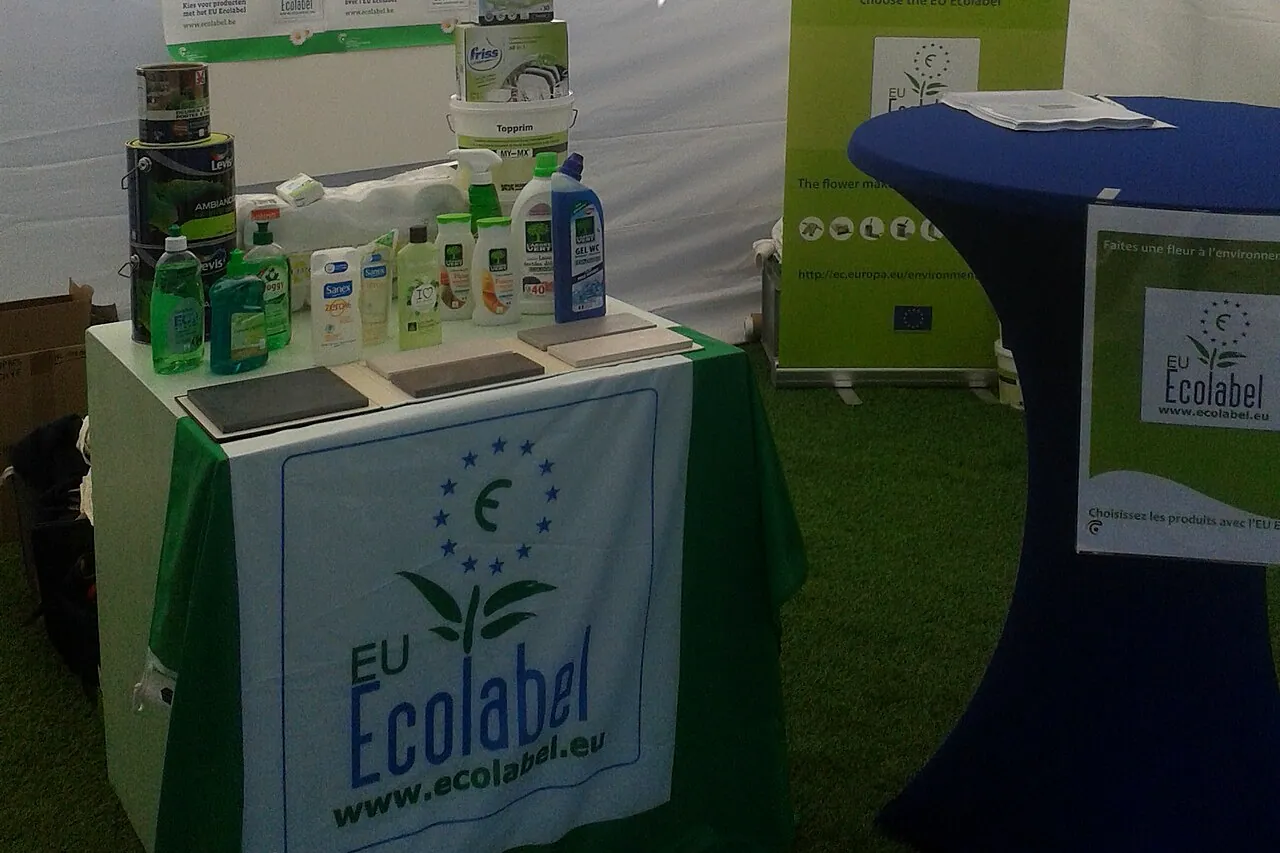
Certification bodies check a product or a piece of evidence against a standard, and they are the only ones that can make a label compliant with the directive. For the EU Ecolabel, AFNOR Certification covers all product categories in France, and Ecocert and Bureau Veritas cover detergents, cosmetics and animal care products, according to service-public.gouv.fr.
Since July 2026 Ecocert has offered ClaimCheck, which combines team training, label certification, advice on communications and documentary or on-site verification of a claim (article of 13 July 2026). Bureau Veritas checks suppliers' evidence for retailers and brands, from textiles to personal care, on an upload platform, with set-up announced in 4 weeks (its service page).
Their prices are on quotation, apart from the public fees of the EU Ecolabel. A certifier checks a product against set criteria; it does not review a campaign. When the same firm advises on and verifies the same message, the question of independence arises, and the guide to choosing a provider deals with it.
Technical firms
Projet Celsius reviews the claims of SMEs and mid-cap companies (ETI in French) that sell to consumers. The flash audit takes 5 days: each message is inventoried medium by medium, matched with its legal basis and ranked by level of documentary risk, then priorities for withdrawal, evidence or rewording are set. Each report is reviewed by Clément Reynaud, PhD and co-founder. When evidence is missing, the same team builds it: a life cycle assessment led by Sébastien Pierfederici in line with ISO 14040 and 14044, or a Bilan Carbone® (the French carbon accounting method).
We do not give legal opinions and we work with the client's lawyer when a case requires it. We do not certify labels, and we have no tool that scans thousands of pages.
Other firms work on the evidence more than on the review. Anthesis puts its life cycle assessment experts to work on a claim to be substantiated or reworded (its 2024 page). For a company selling in Germany, natureOffice and its partner Long Story Short review the climate messages on websites, packaging and campaigns, images and symbols included, under German law (its page).
The ARPP for advertising
The ARPP gives opinions on advertisements under its Sustainable Development recommendation, and its opinion is mandatory before a television advertisement is broadcast. A non-member may request one piece of advice a year, charged at €520 excl. VAT for a campaign of up to 5 projects, according to its 2026 price list. The ARPP judges the advertising message: it does not re-examine the evidence and does not cover packaging.
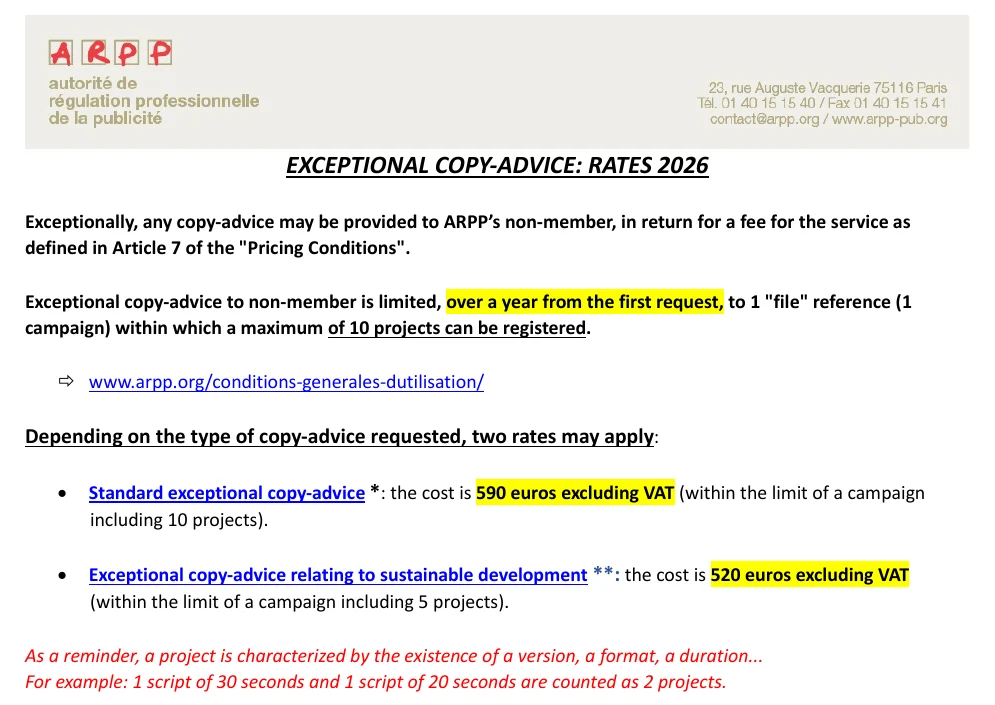
The price list sets €520 excl. VAT for advice on a campaign carrying an environmental claim, limited to 5 projects, and only one campaign a year from the first request. A project is a version: a 30-second spot and a 20-second spot count as 2.
Independent lawyers and accountants
For a micro-business or a small SME, an independent lawyer gives a first opinion at a known price. Kohen Avocats, in Paris, announces in an article of 26 June 2026 on greenwashing a first written analysis at €80 incl. VAT, with a personal reply within 24 hours. This is the price of a preliminary review of a file, not of an audit, and legal advice remains reserved for lawyers and the professions authorised by the Law of 31 December 1971.
The Paris accountancy firm Hayot Expertise estimates, in an article of 19 November 2025, a compliance audit at €2,000 to €8,000, and €1,500 to €3,000 for a micro-business. This is an estimate in an article, not a price list, and the top of the range includes an emissions assessment and a certification.
5How much does it cost to have your claims checked?
The prices published as at 12 November 2026 fall into 2 levels. A one-off opinion costs €0 to €520 excl. VAT: a free tool, a lawyer's first analysis at €80 incl. VAT, ARPP advice at €520 excl. VAT. An audit of a product range costs thousands of euros.
Published prices for checking environmental claims
In euros, on a logarithmic scale: each gridline is worth 10 times the previous one.
On quotation, no published price: Deloitte, Clifford Chance, Ecocert, Bureau Veritas, AFNOR Certification apart from the EU Ecolabel fees, Anthesis, business law firms.
Sources: public pages and price lists read on 12 November 2026; EU Ecolabel from service-public.gouv.fr, excluding the annual fee and on-site inspection; the Hayot Expertise estimate is not a price list.
At Projet Celsius, the flash audit costs €1,900 to €2,900 excl. VAT for 5 days. An evidence study is priced separately: a life cycle assessment takes several months, and the cost of an LCA gives the orders of magnitude. The EU Ecolabel has public fees, €350 to €1,442 for the application and €350 to €1,764 in annual fees, according to service-public.gouv.fr, not counting the on-site inspection.
The price of an audit depends on the number of distinct claims, media, countries and pieces of evidence to gather, far more than on the number of product references. In 2023 the European Commission estimated the substantiation of a simple claim at €500, and a product footprint study at around €8,000, as detailed in our article on the price of an audit. When the evidence study is an LCA, choosing an LCA provider follows other criteria.
For us at Projet Celsius, the question to ask any provider concerns what follows the audit: for each sentence withdrawn, what sentence will you be able to write in its place? A report that leaves only a list of prohibited words leaves marketing with no message to print, and the next campaign starts the exercise again.
6Key takeaways
- No text requires an audit of claims, but every green message must be capable of substantiation if the DGCCRF asks for it.
- The EmpCo directive requires a third party only for a label and for a commitment on future performance.
- The lawyer, the certifier, the ARPP and the online tool each cover part of the work; the technical firm links the message to its evidence.
- Published prices range from €0 to €520 excl. VAT for a one-off opinion; an audit of a product range costs thousands of euros, and an evidence study is priced separately.
- France has not yet voted the transposition law, but the Consumer Code already penalises a misleading claim.
The criteria for comparing 2 offers and the questions to ask before signing are in our guide to choosing a provider for an EmpCo audit.
- European Parliament and Council, Directive (EU) 2024/825 of 28 February 2024, known as EmpCo, Article 1 and Annex.
- French National Assembly, legislative file of the bill adapting French law to EU law (No. 2518), consulted on 12 November 2026 (in French).
- European Commission, letters of formal notice for failure to transpose, 28 May 2026 (in French).
- Légifrance, Consumer Code, Article L. 132-2, consulted on 12 November 2026. The Légifrance pages are in French.
- Légifrance, Law No. 71-1130 of 31 December 1971, Article 54.
- DGCCRF, review of greenwashing inspections 2023-2024, 1 October 2025 (in French).
- European Commission, common position of the CPC network on the application of the directive, 30 June 2026.
- Reporterre, "Shein hit with a record fine in France", July 2025 (in French).
- Deloitte, Green Claims Navigator, consulted on 12 November 2026.
- ESG Dive, "Deloitte launches AI-powered compliance tool to curb corporate greenwashing", 5 November 2026.
- Clifford Chance, "The AI Greenwashing Scanner", brochure, September 2026.
- KPMG Avocats, "EmpCo Directive (also known as ECGT)", 14 October 2026 (in French).
- Ecocert, "How can you secure your claims and combat greenwashing with Ecocert?", 13 July 2026.
- Bureau Veritas, Sustainable Claims Verification, consulted on 12 November 2026.
- Service-public.gouv.fr, EU Ecolabel, page checked on 8 September 2025 (in French).
- Anthesis, "The power of life cycle assessment", 2024 (in French).
- natureOffice, Green Claims Check, consulted on 12 November 2026.
- ARPP, exceptional advice for non-members, 2026 prices.
- Kohen Avocats, "Greenwashing: how to secure an environmental claim before a DGCCRF inspection", 26 June 2026 (in French).
- Hayot Expertise, article on the legal risks of environmental claims, 19 November 2025 (in French).
- WisePIM, "Environmental claims" tool, consulted on 12 November 2026 (in French).